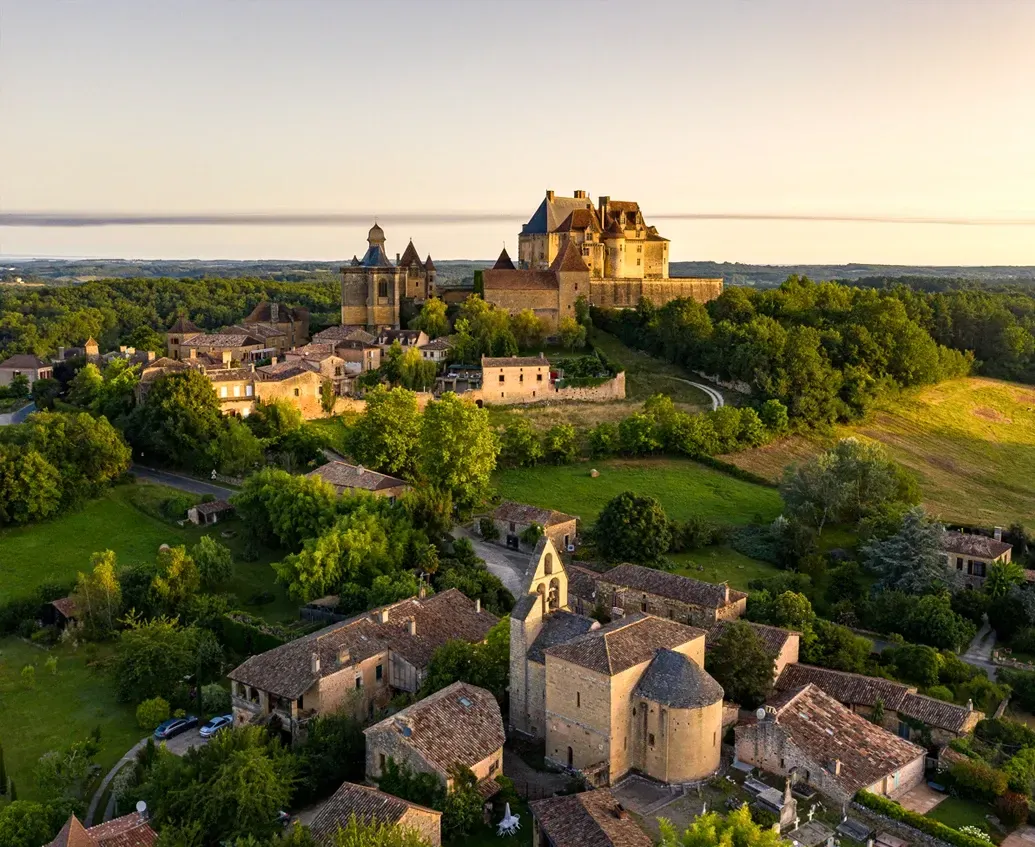
The Dordogne Périgord has more prehistoric sites than almost any département in France. At the origins of history, the Vézère Valley - also known as ‘Vallée de l’Homme’, which translates roughly as 'prehistoric valley' - features 15 prehistoric sites listed as World Heritage by UNESCO. From the cave paintings of the Lascaux caves to the magnificent sculptures of Cap Blanc, from the engravings of Les Combarelles to the archaeological deposits of Laugerie, from rock shelters to troglodyte villages, the works left by our prehistoric ancestors are stunning and poignant
The National Museum of Prehistory in Les Eyzies (the largest museum in Europe devoted to this subject), as well as the Pôle d'Interprétation de la Préhistoire (PIP), aim to promote the exchange of knowledge through temporary exhibitions and events. The life of Cro-Magnon Man can be explored in a fun and exciting way. The relationship between Cro-Magnon Man and the species that lived in his time is evoked in the Parc du Thot. As for cave art, it is deciphered and documented at the Centre international d'Art Pariétal in Montignac - Lascaux IV.
To learn more about the way of life of these men, visit Roc de Cazelle Caves in Les Eyzies or Castel Merle at Sergeac. Here there is an opportunity to learn how to light a fire, to carve flint, to experiment with firing a propeller or to book an excavation workshop.
The National Museum of Prehistory in Les Eyzies de Tayac
Les Eyzies de Tayac

Les Eyzies de Tayac is the ideal starting point for a tour for in depth knowledge about the area. .
Situated at the heart of an incredible number of prehistoric sites, the National Museum of Prehistory houses the most important Palaeolithic collection in France. Modern museography, itineraries showcasing the highlights, engaging guided tours: there is plenty of material to fascinate both adults and children. By visiting the International Prehistoric Interpretation Centre, a building with a modern and natural design, you will discover the keys to the universal heritage of this rich valley.
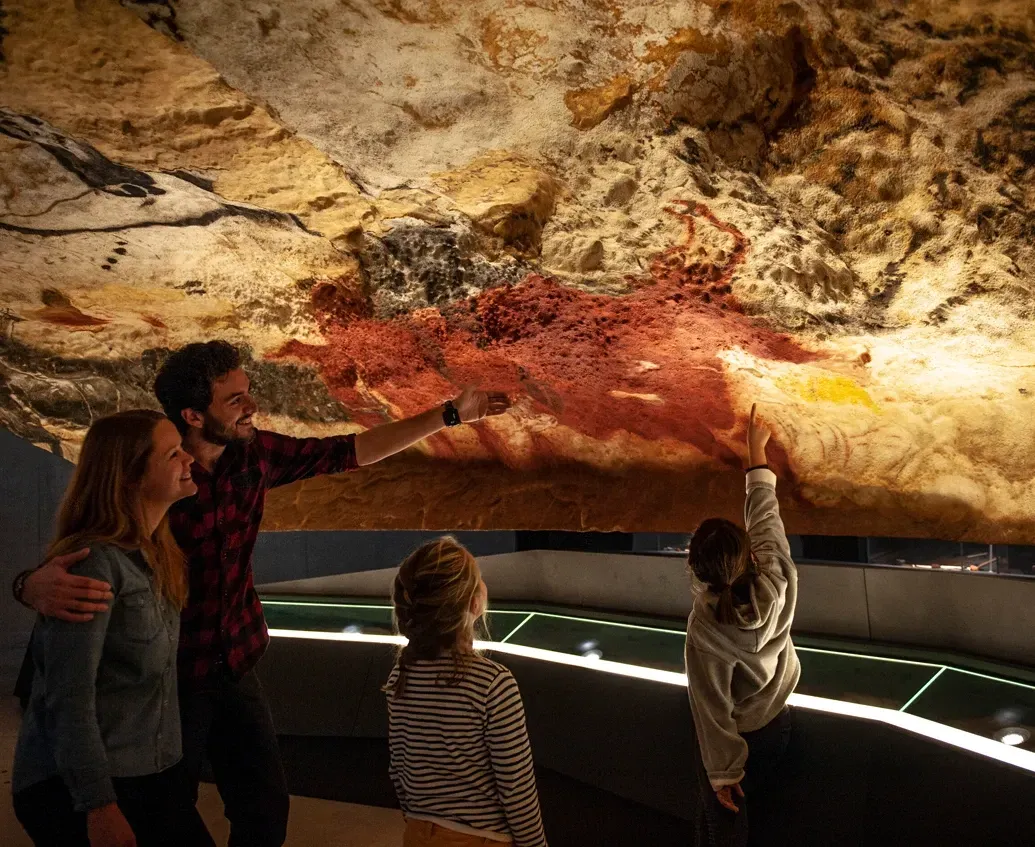
Contrary to popular belief, prehistoric man never used caves as a dwelling place. At most, he used the “porch” of the cave as a sheltered camp. For unknown reasons, early man ventured into the depths of caves to decorate them with various representations, as shown in the Lascaux cave.
After Lascaux, Altamira and Ekain in Spain, the Chauvet cave in Ardèche in the South of France has an almost identical reproduction of its original cave. These main caves are adapting to respond to an increasing tourist frequency, developing new alternatives to rediscover these hidden treasures.
Montignac International Rock Art Center - Lascaux
Lascaux IV

Commonly known as the "Centre International d'Art Parietal de Montignac" or simply Lascaux IV (CIAP ML), in Montignac, this centre has become a reference point for tourism and cultural tourism in the promotion of cave art worldwide.
More than 8,500 sq m of spaces to visit in a contemporary building created by the international architectural studio Snøhetta. The visit, using new imaging and virtual technologies, includes a complete and previously unseen reproduction of the Lascaux cave (the Bull Room, the Axial Diverticulum, the Passage, the Nave, the Rotunda and the Well), as well as 4 exhibition rooms that tell the story of the discovery of Lascaux, its place in the world of cave art and its relationship with contemporary creation.
To complete their visit to CIAP Montignac Lascaux, children will love discovering the Thot, the “Cro-Magnon space” and its new animation. Thanks to augmented reality technology, they will be able to interact with extinct animals such as a mammoth, a woolly rhinoceros and the list goes on!

By The editor
The editorial staff of France.fr follows the trends and news of destinations to bring you stories from France that reveal its innovations and traditions that make you long to (re) discover its territories.