
Long before he became one of America's most beloved foreign heroes, Gilbert du Motier, Marquis de Lafayette, was a young aristocrat from the heart of France. Born in the Auvergne region, his passion for liberty would take him across the Atlantic and help forge an enduring friendship between France and the United States.
A Young Nobleman from Auvergne

Lafayette's Bedroom, Château de Chavaniac-Lafayette
Nestled amid the volcanic landscapes and rolling countryside of Auvergne, the Château de Chavaniac-Lafayette was far removed from the battlefields and political salons that would later shape Lafayette's destiny. Orphaned at an early age and inspired by ideals of honor and freedom, the young aristocrat dreamed of a life beyond the confines of the French court.
Defying the King of France
In 1777, at just nineteen years old, Lafayette made a decision that would change not only his own destiny, but also the course of American history and the enduring friendship between France and the United States. Despite the objections of his family and explicit orders from King Louis XVI forbidding French officers from joining the conflict, he secretly arranged and financed the purchase of a ship, "La Victoire" and sailed across the Atlantic to support the American cause.
Washington's Adopted Son
Lafayette arrived in America as a young volunteer, but he soon found more than a cause—he found a mentor and lifelong friend in George Washington. The two first met in Philadelphia in the summer of 1777, and Washington quickly welcomed the nineteen-year-old Frenchman into his "military family." Their bond would deepen through years of shared hardship and mutual admiration, becoming one of the most enduring symbols of friendship between France and the United States. Lafayette would later refer to Washington as his "adopted father," while naming his only son Georges Washington Lafayette in his honor.
From Brandywine to Yorktown
Wounded at the Battle of Brandywine and present during the difficult winter at Valley Forge, Lafayette quickly proved both his courage and loyalty to the American cause. Over the following years, he became one of Washington's most trusted commanders and played a crucial role in securing French military support for the young nation. Returning briefly to France in 1779, he won the support of the French court and helped secure the expeditionary force that would sail to America under Rochambeau.
His return to America aboard L'Hermione in 1780 brought news of vital French reinforcements, paving the way for the decisive victory at Yorktown in 1781 and ultimately American independence.
A Friendship That Endures
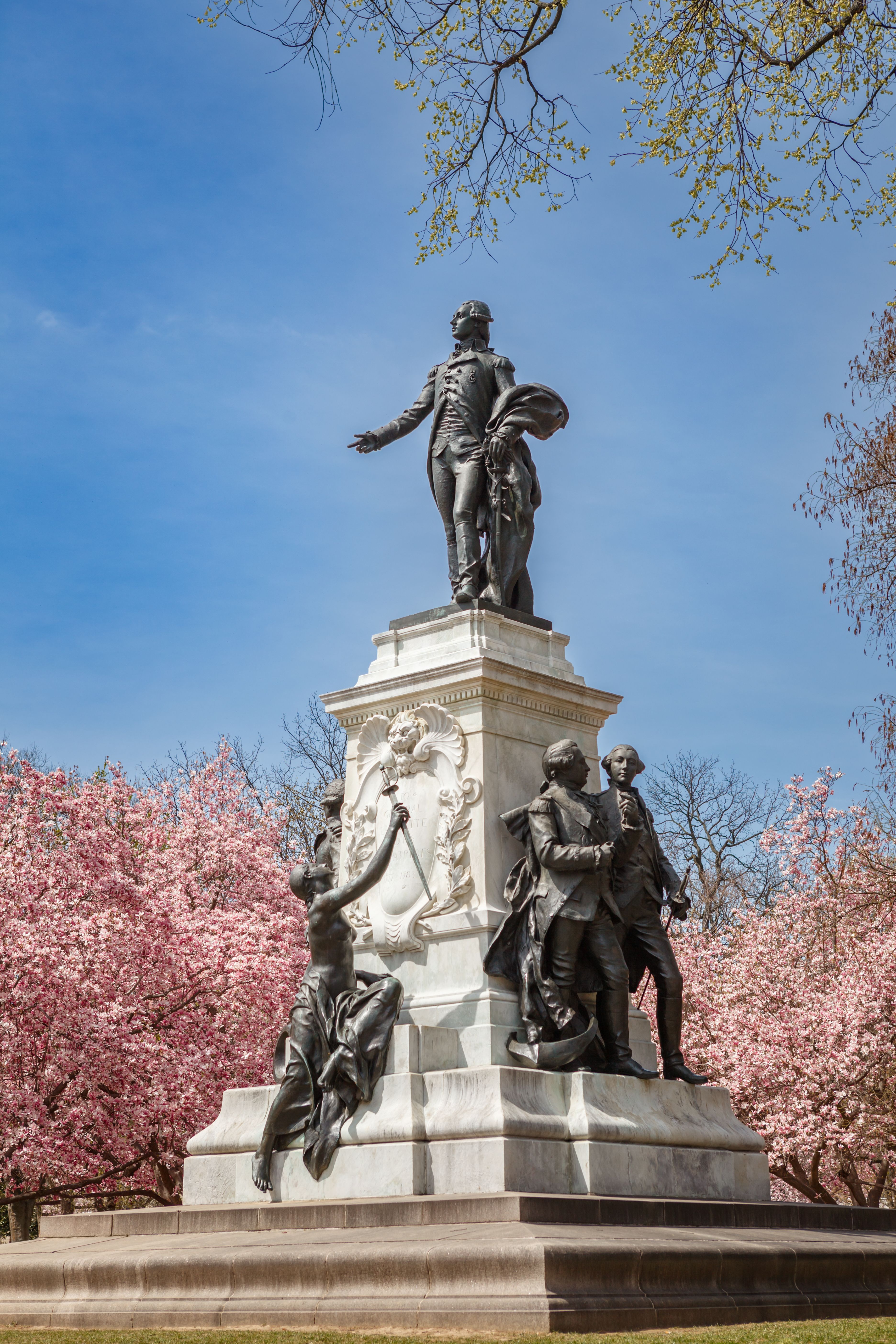
Lafayette's connection to the United States did not end with the Revolution. In 1824, nearly fifty years after his first voyage, he returned to America as the "Guest of the Nation," embarking on a triumphant tour of all twenty-four states.
Today, his legacy can still be discovered across France; from the Château de Chavaniac-Lafayette in Auvergne to the historic port of Rochefort and the streets of Paris. Across the United States, countless towns, streets, parks, and monuments bear his name, a lasting tribute to the French hero who became one of America's dearest friends.
More than two centuries later, Lafayette remains one of the most powerful reminders that the friendship between France and the United States was forged not only by shared ideals, but also by the extraordinary bond between two nations and the people who believed in them.