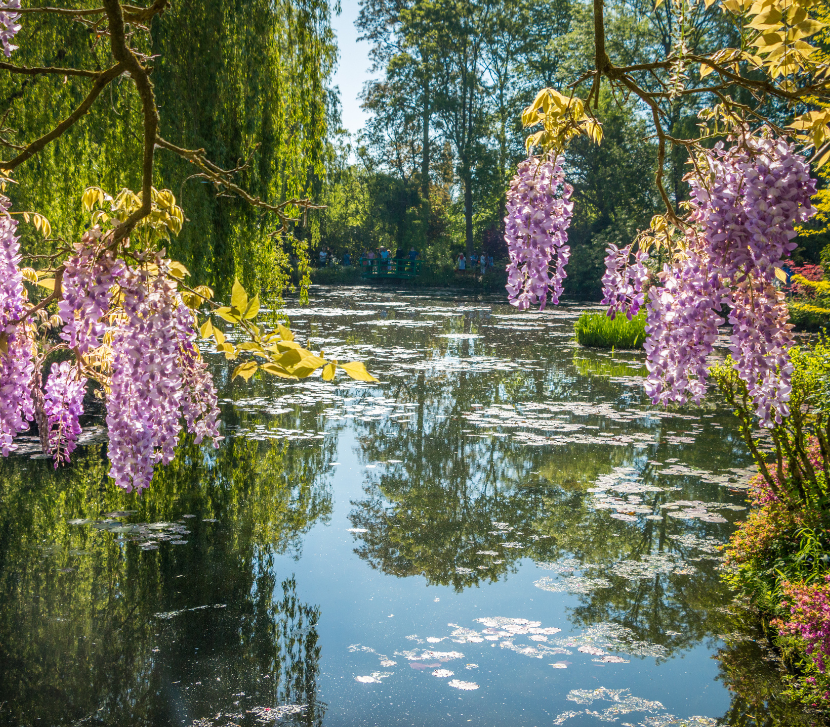
Claude Monet, father of Impressionism, passed away 100 years ago. His name evokes many paintings, colors, and brushstrokes. The master was in love with Normandy, where he grew up, and it was there that he produced his most famous works. But the artist was also fascinated by the colors and contours of Paris, its surroundings, the Creuse region, and the French Riviera. Join us on a journey in the footsteps of the painter.
NORMANDY: the birthplace of Impressionism
A muse among muses, Normandy lent Monet its wild coastline, chalk cliffs, charming little ports, and exceptional monuments to his brush. And, of course, a place, Giverny, made eternal thanks to his water lilies.
The Normandy coast
Honfleur, France
Le Havre
One morning in the winter of 1872, from his room at the Amirauté hotel, Monet painted the outer harbor of Le Havre in the mist. Two years later, Impression, Sunrise was mocked by a journalist. His contempt for what he called “the Impressionist exhibition” gave its name to one of the greatest painting movements in history, Impressionism.
Follow in the footsteps of the master as you stroll around the port of Le Havre, particularly along the Grand-quai, where the Hôtel de l'Amirauté once stood. You can also take a walk along Sainte-Adresse beach, which begins at the entrance to the port and stretches to the cliffs of the town of Sainte-Adresse. These places inspired the artist to paint The Beach at Sainte-Adresse and Regattas at Sainte-Adresse. The surrounding area also inspired Entrance to the Port of Le Havre, Overcast Weather, and The Commerce Basin. At the André Malraux Museum of Modern Art (MUMA), you can see works by Monet such as Winter Sun, Lavacourt.
The cliffs of Étretat
Monet, who was fond of series, devoted one to the cliffs of Étretat, including La Porte d'Aval, La Manneporte, and Les Aiguilles. It must be said that the wild landscapes of the Alabaster Coast and the majesty of its cliffs are particularly striking.
They can be easily discovered, in the sea-spray-filled air, during a walk along the path overlooking the sea, or while meditating on the beach at Étretat, enclosed by the cliffs of Amont and Aval.
Honfleur
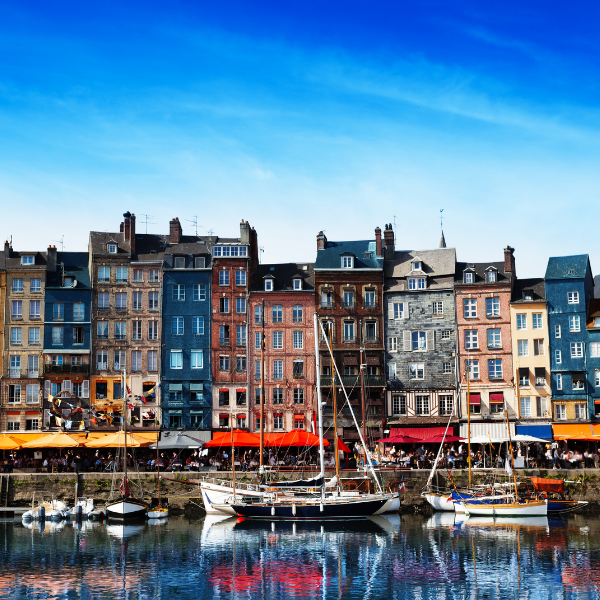
In this small Norman port, Monet painted seascapes alongside his friend Eugène Boudin. Rue de la Bavolle, the lighthouse, and the beach also inspired him. It must be said that this city of painters is a little gem, as pretty as a picture. Discover the old harbor and the beautiful houses that surround it, the remains of ancient fortifications, the lieutenancy, Sainte Catherine Church, and of course the Eugène Boudin Museum. The latter houses a painting depicting a bell tower in Honfleur, long attributed to Monet, but which was in fact signed by Boudin himself.
Read: From Dieppe to Le Havre: the Impressionists' journey through Normandy
Rouen
Rouen, France
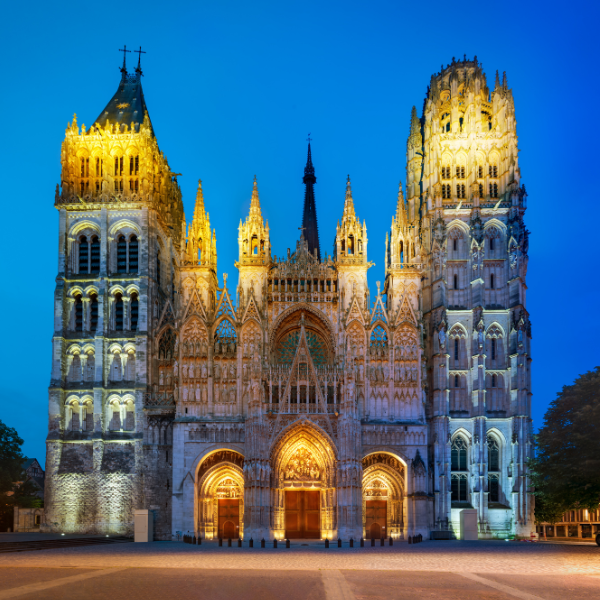
In Rouen, the painter fell in love with the cathedral, to which he devoted a series comprising more than thirty variations. For two years, from 1892 to 1894, Monet depicted the western façade from different angles and at different times of day. A remarkable cathedral and one of the most beautiful in France, Notre-Dame-de-l'Assomption is also the tallest in the country with its 151-meter spire.
No visit to Rouen is complete without a trip to the Museum of Fine Arts, particularly the Depeaux Gallery, to admire the works of the Impressionist master.
Giverny
Giverny, France
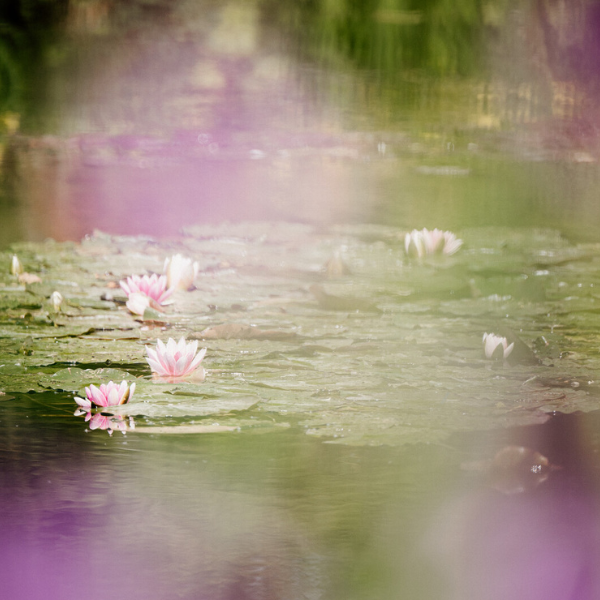
Monet lived in this “beautiful country” he adopted in 1883 for forty-three years, achieving international acclaim by painting the Water Lilies, Haystacks, and Poplars series. Visit his former home for a timeless experience, up close with his work:
The water garden and the water lily pond
Undoubtedly the most iconic spot. With its famous Japanese bridge, calm waters reflecting the willow trees, and ever-changing water lilies, this garden is the subject of some of Monet's most famous paintings.
The Norman enclosure (the flower garden)
In front of the house, the flower garden offers a total immersion in the painter's palette: beds of roses, irises, peonies, nasturtiums... Reinvented throughout the seasons, it allows visitors to understand the importance Monet attached to the cycle of flowering.
Claude Monet's house
Restored to its original state, the house reveals the artist's private life: his bright living room-studio, colorful rooms, iconic yellow dining room, bright blue kitchen, and above all his remarkable collection of Japanese prints.
The Musée des Impressionnismes Giverny
Located right next to the house, the museum offers high-quality temporary exhibitions dedicated not only to Monet, but also to his contemporaries and artists influenced by the Impressionist movement.
Read: 5 good reasons to visit the Musée des Impressionnismes Giverny
PARIS AND ITS REGION: a source of urban and river inspiration
Paris, France
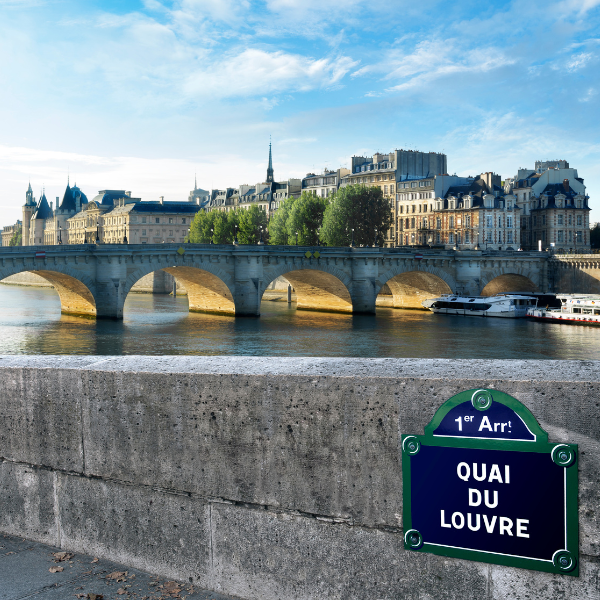
In 1859, Claude Monet left Le Havre for the capital, which he nicknamed “dizzying Paris,” and the region never ceased to inspire him, from the streets of the capital to the banks of the Seine.
Paris
The French capital greatly inspired the master, and Paris can be found in many of his paintings: Le Quai du Louvre, Le Boulevard des Capucines, Le Parc Monceau, and Les Tuileries. The Saint Lazare train station, to which he devoted a series capturing the steam, light, and movement of trains, was also his muse.
Today, Paris has the largest collection of Impressionist paintings in the world. The Musée Marmottan exhibits the world's largest collection of the master's works. It is here that you can admire the iconic Impression, Sunrise. The Musée d'Orsay and the Musée de l'Orangerie house an exceptional collection of works by Claude Monet.
Argenteuil
Monet settled in Argenteuil in the 1870s and enjoyed painting the riverbanks, sailboats, and changing atmospheres. There he painted Le Pont d'Argenteuil, La Seine à Argenteuil, Les Régates à Argenteuil, Effet d'automne à Argenteuil, and Le Bassin d'Argenteuil. You will enjoy visiting the Impressionist House, where Monet lived from 1874 to 1878 and painted many of his works.
Recommended reading: A cultural cruise in the footsteps of the Impressionists
THE CREUSE VALLEY: life-size painters' workshop
Crozant, France
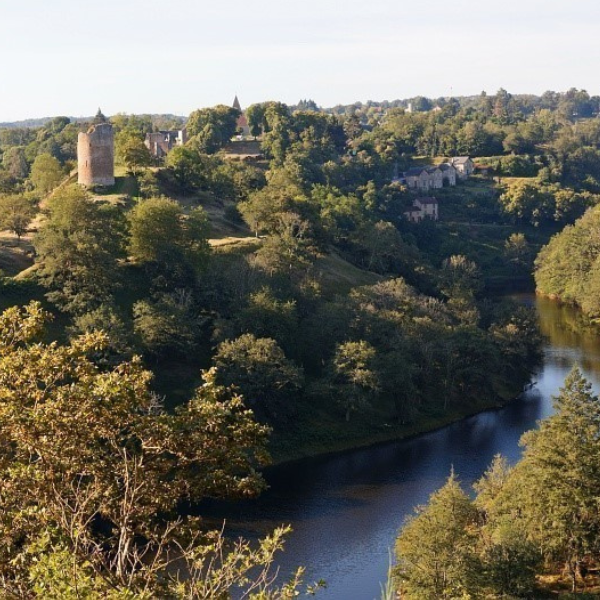
Between Fresselines, Crozant and Gargilesse-Dampierre, Claude Monet fell under the spell of the Creuse Valley in central France, with its rocky hills, rivers and expanses of heathland. In 1889, he stayed there for several weeks and produced around thirty paintings. Among his most iconic works are The Confluence of the Two Creuses, The Mill at Vervy and The Creuse Valley at Sunset. Now known as the ‘Valley of Painters’, this region, which inspired many Impressionists and Post-Impressionists, is well worth a visit.
Fresselines
This is where Monet stayed in the spring of 1889, lodging at the Auberge Saint-Denis, which no longer exists. The village, nestled at the confluence of the Grande and Petite Creuse rivers, retains its charm. Visitors can follow in the footsteps of the painters along a marked trail that leads to the viewpoints from which Monet painted.
The confluence of the two Creuse rivers
This spectacular natural site, accessible from Fresselines, is one of the most famous motifs in Monet's paintings. The promontories offer a sublime view of the rocks and the river, in a setting that has remained almost unchanged since the 19th century.
Crozant
The romantic ruins of the fortress overlooking the Creuse and Sédelle rivers have inspired many artists, including Armand Guillaumin, a friend of Monet's. The Crozant Ruins site offers breathtaking views of the gorges, and the Vallée des Peintres Interpretation Centre traces the history of art in the area.
THE FRENCH RIVIERA: an explosion of light
Menton, France
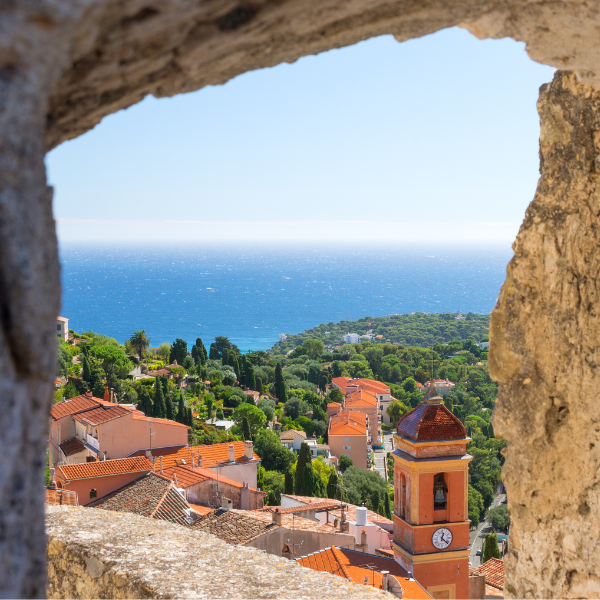
The vivid colours, sky and lush flora of the French Riviera inspired Monet, as they did so many other painters. Menton and Antibes particularly captivated him from the 1880s onwards. He was drawn to the vivid contrasts, lush vegetation and bright blue skies.
Menton
Monet painted near Menton The Road to La Turbie, also known as The Red Road near Menton, characterised by its warm colours and steep terrain. Deeply impressed by Cap Martin, which he immortalised in The Point of Cap Martin, we still visit the region with wonder, particularly the medieval village of Roquebrune-Cap-Martin, a magnificent site perched high above the Mediterranean.
Antibes
Monet stayed in Antibes in 1888 and produced around forty paintings in four months. He described Antibes as ‘a small fortified town, gilded by the sun, standing out against beautiful blue and pink mountains’. From this period date Antibes seen from La Salis, The Fort of Antibes, The Alps seen from Antibes, Morning in Antibes... All of them hymns to the light of the South. The town remains a must-see for its superb coastal path, its cape and its old town.
Picasso, Matisse, Chagall...
Côte d'Azur - French Riviera


By The editor
The editorial staff of France.fr follows the trends and news of destinations to bring you stories from France that reveal its innovations and traditions that make you long to (re) discover its territories.


