Places of passage and emotion, France's major railway stations are much more than just departure or arrival points! They tell a story of a century and a half of history, style and ingenuity. Beneath their glass roofs, between stone and steel, a new way of travelling is invented: contemplative, curious, and a touch nostalgic. From Strasbourg to Nice, Bordeaux to Paris, embark on our tour of France's most iconic stations.
Strasbourg railway station: the most European
Strasbourg, France
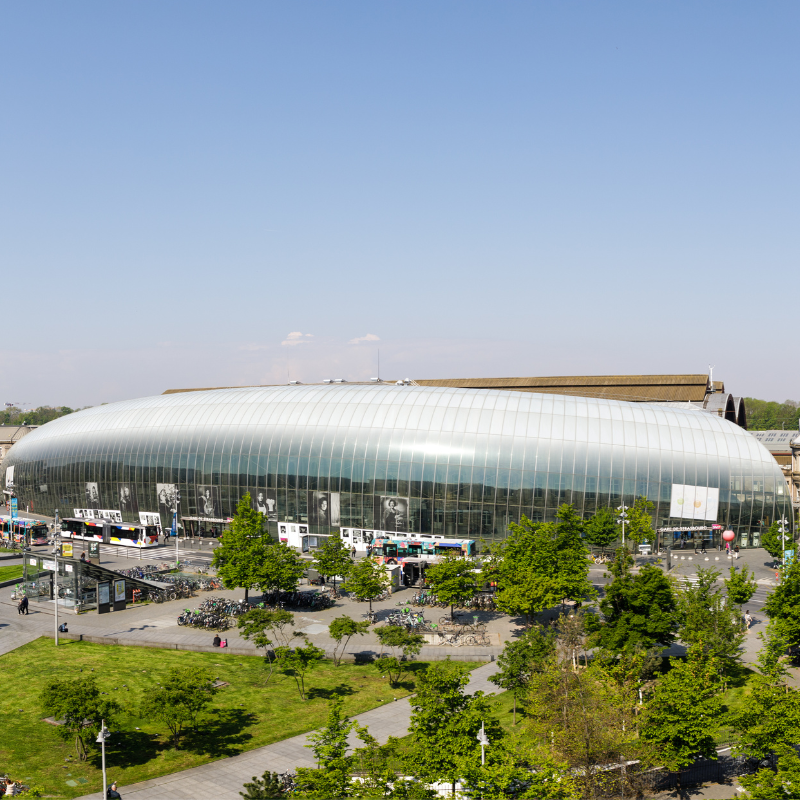
In Strasbourg, it all begins beneath the light of an immense glass and steel canopy. Behind it lies a 19th-century gem designed by Johann Eduard Jacobsthal, whose neo-Renaissance façade evokes the splendour of the imperial era. Completely restored, the building once again reveals its stained-glass windows, sculpted ceilings and hushed atmosphere. In the former Imperial Lounge, renamed Grand Voyageur, a high-end restaurant is set to open soon, continuing the spirit of hospitality and elegance of the place. Open on all sides, the station connects France, Germany and Switzerland in a single breath of modernity. A refined stopover where Europe comes together.
Metz-Ville station: the most historic
Metz, France
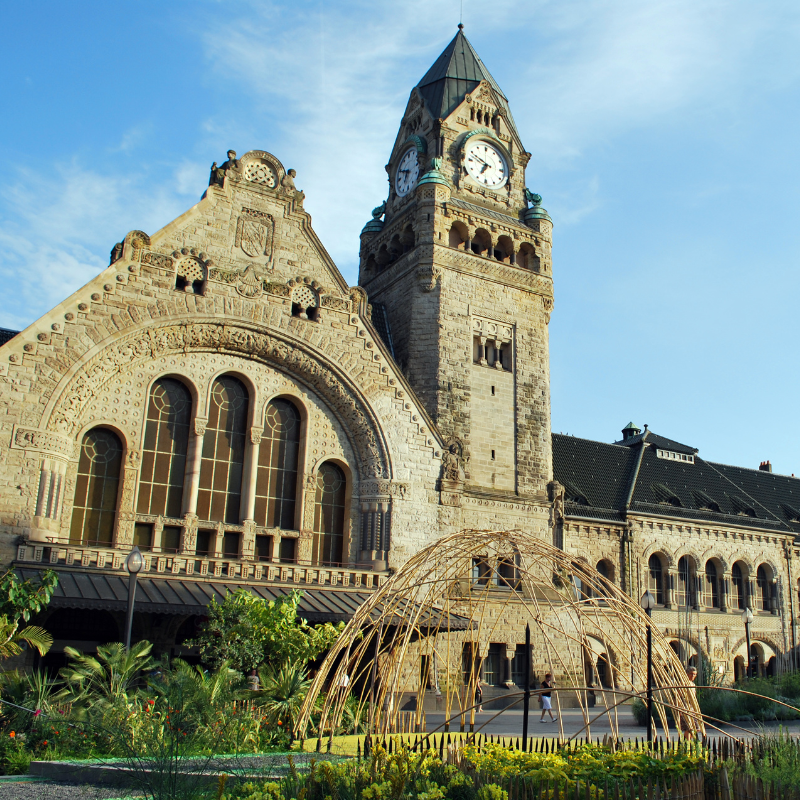
In Metz, you enter as if into a cathedral of pale stone. The station, a masterpiece by Jürgen Kröger, was built between 1905 and 1908, at a time when Alsace-Moselle was under German annexation. Its monumental arches, 40-metre clock tower and stained-glass windows shape the atmosphere of this city of art and history. A symbol of the Neo-Romanesque style, it tells the story of a time when the train embodied the prestige and power of an empire. Now listed as a historic monument and voted ‘France's most beautiful station’ several times over, it combines imperial grandeur with the gentle charm of Lorraine. Just a stone's throw from the city centre, it is the ideal gateway to discover Metz, its heritage, its gardens and its golden light at sunset.
Gare de Lyon (Paris): the most iconic
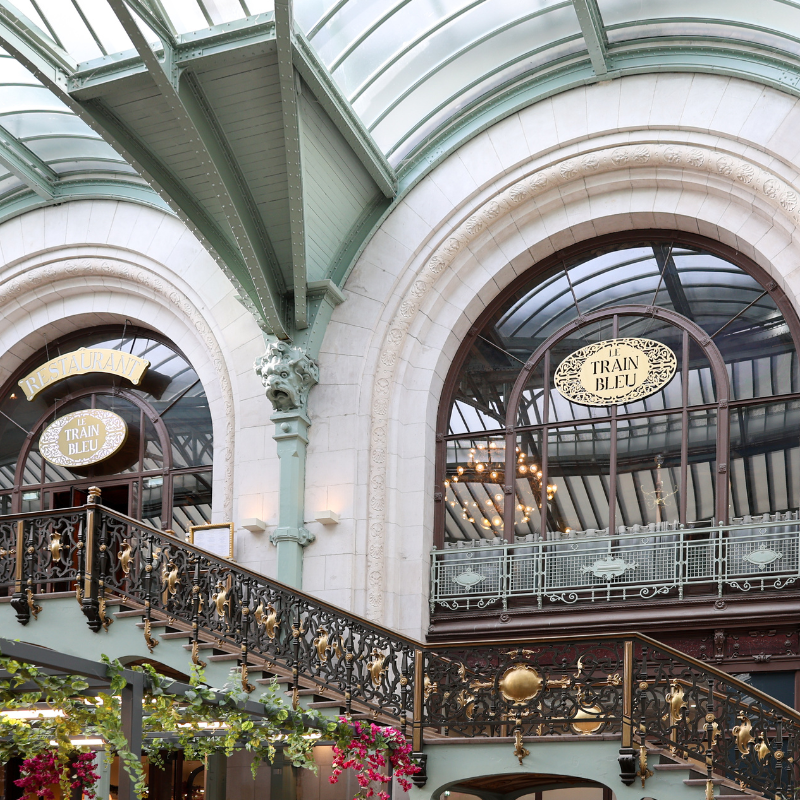
Beneath its large clock facing the sky, the Gare de Lyon embodies the elegance of French travel. Inaugurated for the 1900 World's Fair, it combines Belle Époque splendour with modernity. Its legendary restaurant, Le Train Bleu, classified as a historic monument, features painted ceilings and gilding as a tribute to the art of travel. A place of transit but also a meeting place, the station combines cafés, shops and workspaces under the light of its grand hall. A departure to the south, a stopover in Paris, a moment suspended between two worlds.
Gare du Nord (Paris): the busiest railway station in Europe
Paris, France
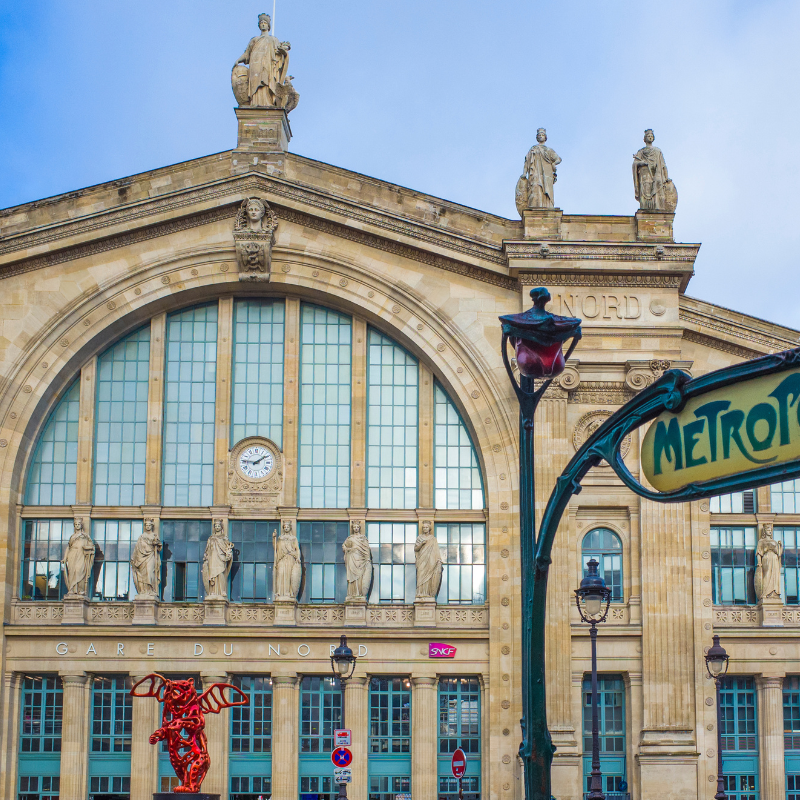
A 19th-century masterpiece designed by Jacques Hittorff, the Gare du Nord connects more than 200 million travellers to London, Brussels and Amsterdam every day! Its neoclassical façade, adorned with statues representing the cities it serves, evokes the charm of a heroic era. Currently undergoing a transformation, it is set to become a vast hub of activity, with a green forecourt, new transport links, shops and cultural spaces. A vibrant crossroads, combining monumental heritage with a vision of the future.
Lyon Saint-Exupéry Station: the most futuristic
Colombier-Saugnieu, France
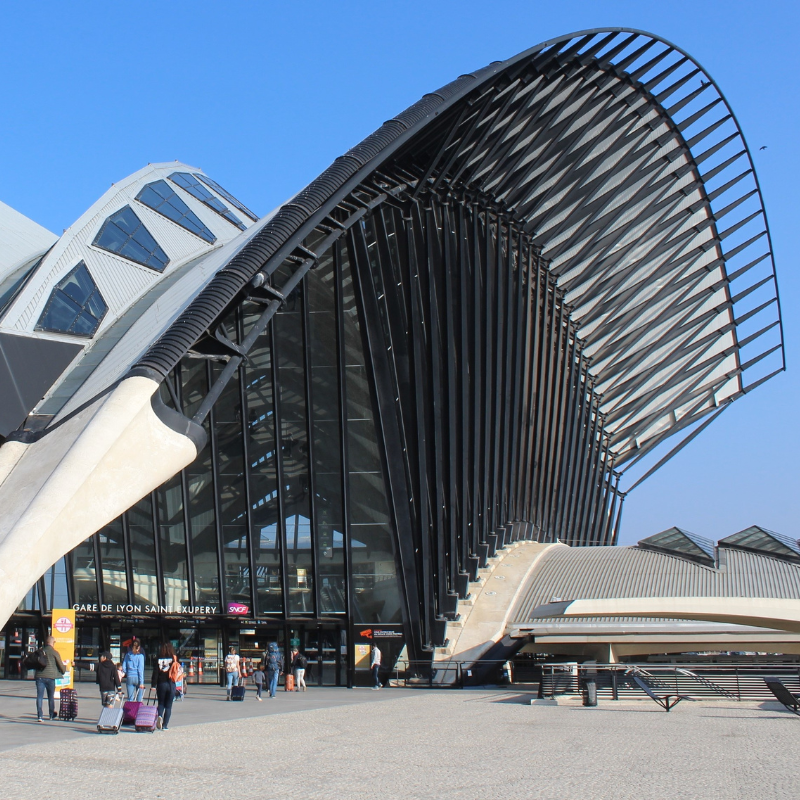
Designed by Santiago Calatrava, Lyon Saint-Exupéry station spreads its wings of steel and glass across the Lyon plain. With its slender lines and airy structure, it looks ready to take flight. Directly connected to the airport, it embodies fluid movement and architectural beauty. Between earth and sky, a bird of glass and steel.
Limoges-Bénédictins station: the most artistic
Limoges, France
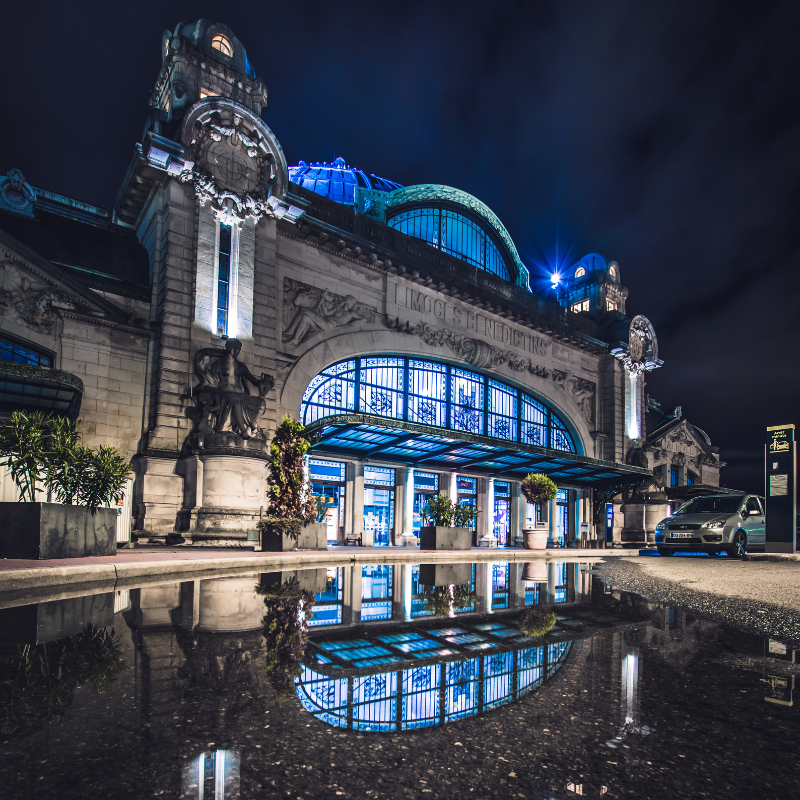
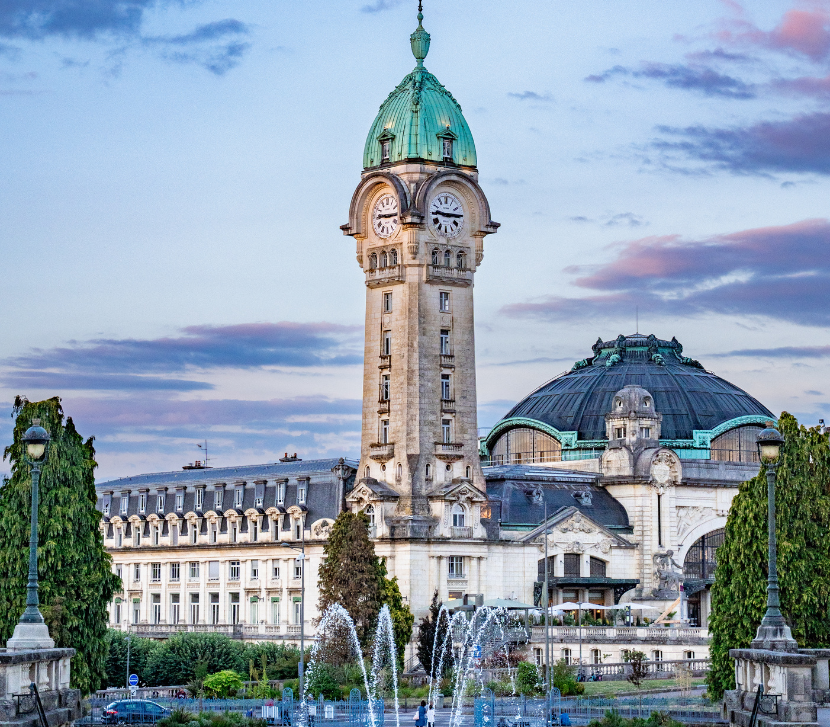
Beneath its verdigris dome and four-faced clock, the Bénédictins railway station has watched over Limoges since 1929. An Art Deco masterpiece designed by Roger Gonthier, it charms visitors with its ironwork, stained glass windows and raised concourse, a rarity in Europe. Still in service today, it remains a symbol of Limoges craftsmanship. Guided tours allow visitors to explore behind the scenes of this jewel of stone and copper, as poetic as it is functional.
Rennes station: the most innovative
Rennes, France
In Rennes, the station opens up like a breath of fresh air onto the city. Light wood, glass and light: everything here evokes a Brittany that is reinventing itself, between nature and design. Designed to accommodate the LGV (high-speed line), it connects the northern and southern districts with a vast suspended hall and green forecourts. Shops, galleries, relaxation areas: a new-generation space, peaceful and lively, reflecting the image of the Breton capital.
Nice-Ville station: the most Mediterranean
Nice, France
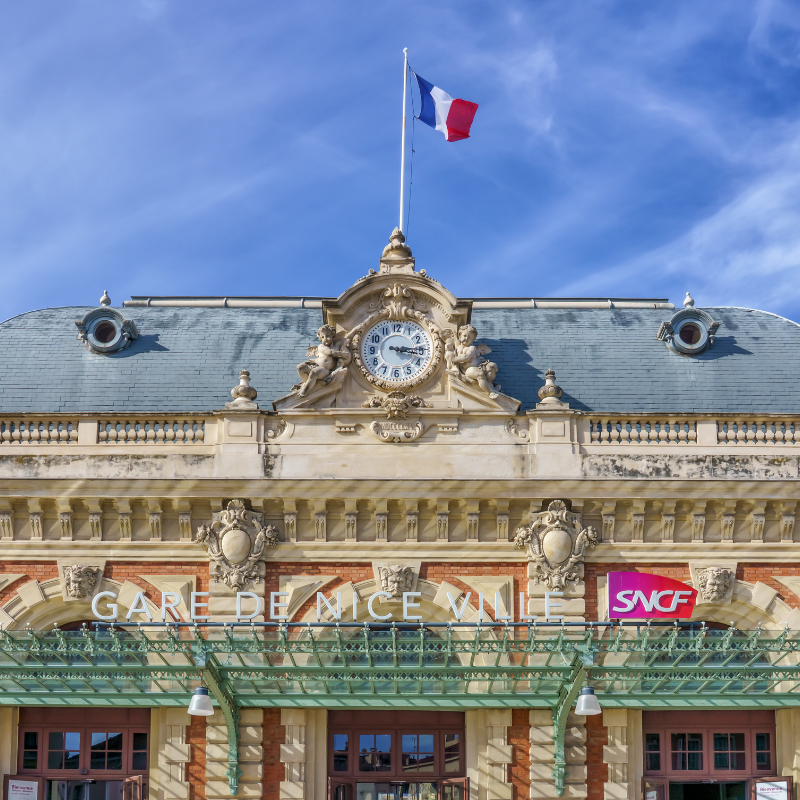
Between the sea and palm trees, Nice-Ville station exudes Belle Époque charm. Designed by Louis Bouchot, it captivates visitors with its sculpted façades, lace-like metalwork and azure light. Just a few minutes from the Mediterranean, it embodies the charm of Nice: elegant, sunny and always on the move. Carefully restored, it has retained its original soul while opening up to the modern world. Under its glass dome, the salty air mingles with the breath of the trains, a sunny stopover between heritage and Côte d'Azur atmosphere.
Bordeaux Saint-Jean Station: the most majestic
Bordeaux, France
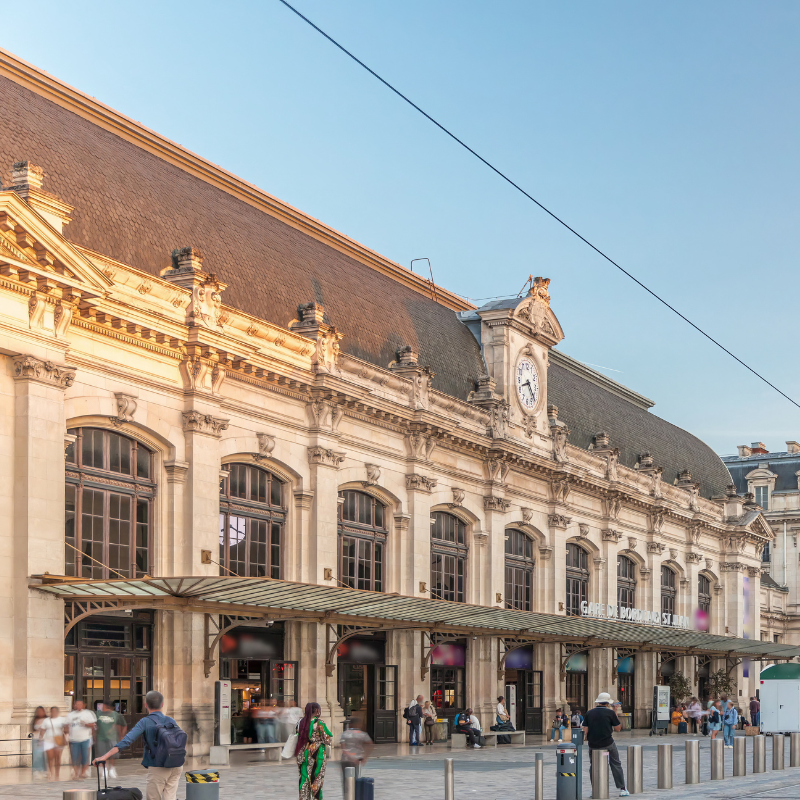
Designed by Marius Toudoire and topped with a glass roof by Gustave Eiffel, Saint-Jean station embodies the grandeur of Bordeaux's industrial heritage. Built at the end of the 19th century, it combines blonde stone, metal and light in a masterful composition. Listed as a historic monument, it houses stained glass windows, sculptures and restored frescoes, witnesses to the golden age of rail. Opening onto the Garonne, between the tramway and renovated cafés, it combines elegance and Bordeaux's effervescence, a place where history and modernity travel together.
Montpellier Saint-Roch station: the brightest
Montpellier, France
Light, greenery and transparency: Saint-Roch exudes the spirit of the South. In the heart of Montpellier, this station opens onto the city, connecting trains, trams and bicycles in a fluid, contemporary ballet. Its openwork walkways, green patios and lively terraces make it a lively place to linger between journeys. An urban belvedere overlooking the gentle pace of Montpellier, bathed in sunshine and movement.
Toulouse-Matabiau station: the most historic station in south-western France
Toulouse, France
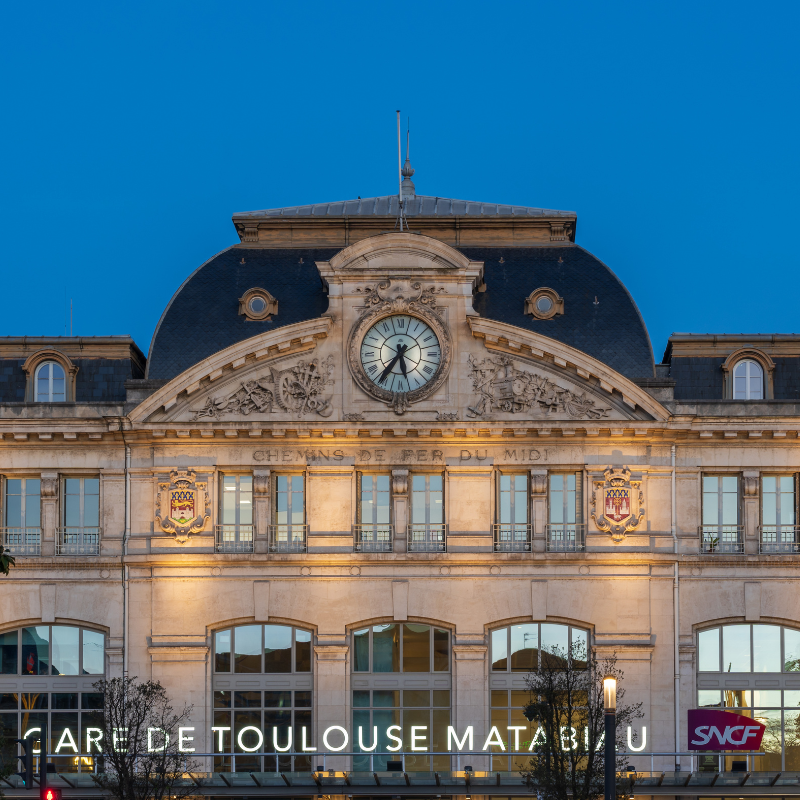
With its pink brick façade and large glass windows, Matabiau embodies the spirit of Toulouse. Designed by Marius Toudoire at the end of the 19th century, it combines industrial elegance with southern warmth. Listed as a historic monument, it remains a landmark in the south of France, a starting point for journeys to the sea, the mountains or the vineyards of Occitanie. Beneath its sculpted ceilings, the scent of another era still lingers, a time when travelling by train was already considered an art of living...
Marseille Saint-Charles Station: the most panoramic
Marseille, France
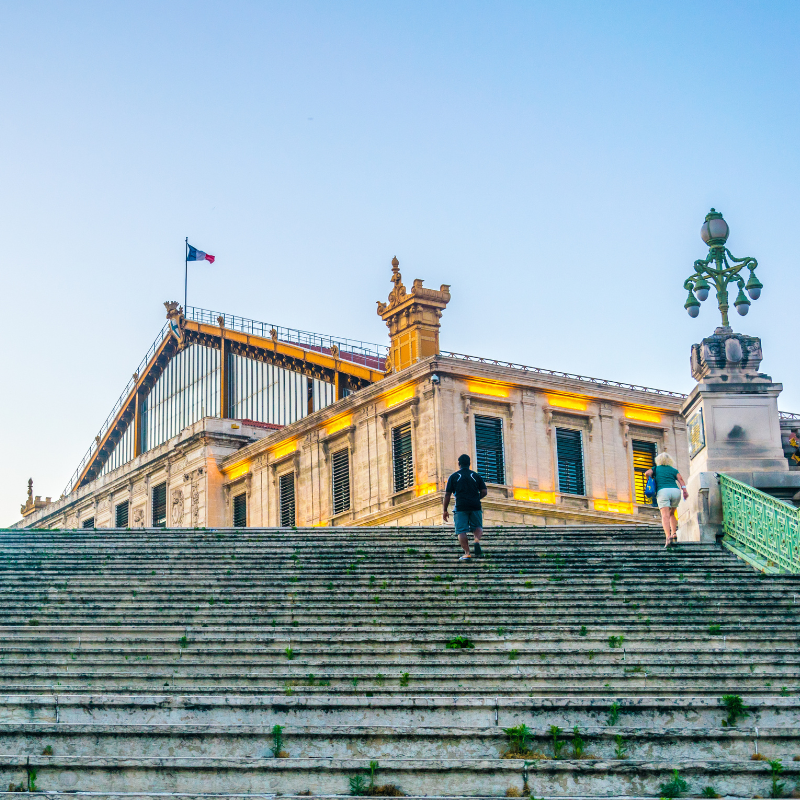
Dominating the Phocaean city from its vast staircase, Saint-Charles station watches over Marseille like a balcony overlooking the Mediterranean. Inaugurated in 1848, it combines blonde stone and period ironwork in a sun-drenched setting. From its vaulted hall, the gaze glides towards the sea, between rooftops and hills, promising escape and distant horizons. A place of passage as much as a place of life, it connects north and south, the capital and the sea, in a single burst of diversity and light. A vibrant Marseille landmark.
Nantes station: the most sustainable
Nantes, France
In Nantes, mobility is reaching new heights. An aerial walkway made of glass and wood now connects the two forecourts, like a bridge suspended between the past and the future. Inaugurated in 2020, this new-generation station embodies the smooth transition that is so dear to Atlantic Loire Valley metropolis: trams, bicycles, electric charging stations and urban gardens make up a fluid and peaceful ecosystem. Bathed in natural light, travellers and residents meet here as if in a place of passage and life. Ecological, inventive and welcoming, it reinvents the art of departure in the Nantes style.

By The editor
The editorial staff of France.fr follows the trends and news of destinations to bring you stories from France that reveal its innovations and traditions that make you long to (re) discover its territories.