From Montagne Sainte-Victoire near Aix-en-Provence to the gardens of Giverny, via the Creuse Valley, Collioure, the port of Pont-Aven and the forest of Fontainebleau, France's landscapes and villages have inspired great artists such as Monet, Cézanne, Matisse and Gauguin. From Provence to Normandy, follow in the footsteps of the Impressionist, Fauvist and Symbolist painters. Museums, studios, outdoor reproductions of works of art... we reveal a selection of artistic itineraries combining nature walks and cultural visits to discover France in a different way. Grab your paintbrushes, get set, explore!
Where are the roads and cities of painters?
From Le Havre to Auvers-sur-Oise: the route of the Impressionist painters in Normandy and the Seine Valley
Honfleur, France
Chalk cliffs of the Alabaster Coast, maritime landscapes in Le Havre, verdant gardens in Giverny... Cradles of the Impressionist movement, the varied and luminous landscapes of Normandy and the Seine Valley inspired numerous artists in the 19th century such as Claude Monet, Auguste Renoir, Alfred Sisley, and Camille Pissarro. Here are some essential stops to visit on the Impressionist painters' route, following in the footsteps of the great figures in art history.
Places to discover:
- Chatou: West of Paris, the Island of the Impressionists is perfect for bucolic walks on foot or by bike, following the cycling route "La Seine à Vélo" in the footsteps of the Impressionist painters who set up their easels there, like Auguste Renoir. A reproduction of his work Luncheon of the Boating Party immerses visitors in the festive atmosphere that reigned on the island during the Belle Époque.
- Auvers-sur-Oise: North of Paris, on the banks of the Oise River, Auvers-sur-Oise is an unmissable stop on the Impressionist painters' route. It was here that artist Vincent Van Gogh created more than 80 works, including The Church at Auvers-sur-Oise and Wheatfield with Crows. Located in the former Ravoux inn, Van Gogh's House invites visitors into the artist's private world. An open-air museum, this charming hillside village also houses Doctor Gachet's House, the Daubigny Museum (classified as a Historic Monument and located in the Manoir des Colombières), as well as the studio of this artist who was a precursor to Impressionism.
- Giverny: Among wisteria, weeping willows, and the water lily pond, Claude Monet's gardens in Giverny form a living painting. After visiting the artist's house, the pictorial stroll continues in the gardens of the Museum of Impressionisms. Beds of peonies, irises, and cosmos, rose-lined paths—these botanical arrangements echo the masterpieces of modern artists displayed inside the museum during temporary exhibitions. Then take a seat at Restaurant Baudy, a former meeting place for Impressionist painters like Renoir and Cézanne.
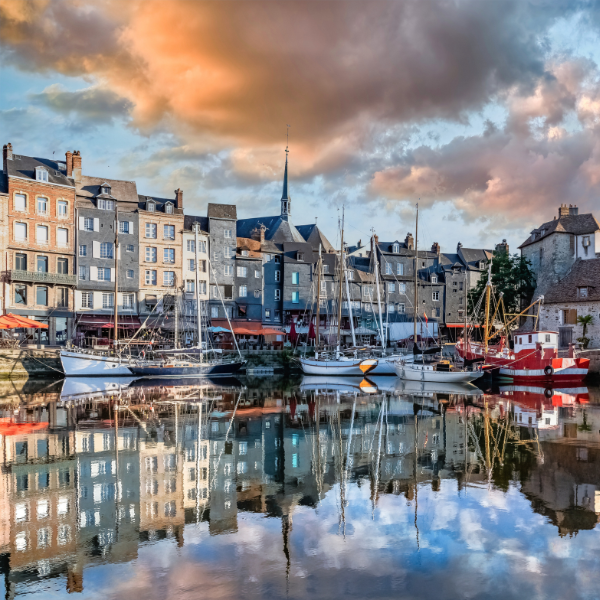
- Honfleur: At the mouth of the Seine, Honfleur, near Deauville, is a Norman gem with its iconic old harbor surrounded by lively restaurants and colorful facades. It was a source of inspiration for Eugène Boudin, a precursor of the Impressionist movement and native son who bequeathed 70 works to the Honfleur museum, now called the Eugène Boudin Museum. For a gastronomic and wellness experience, head to Ferme Saint Siméon, a former inn transformed into a 5-star hotel where the "king of skies" loved to meet his friends.
- Le Havre: Having just crossed the impressive Normandy Bridge spanning the Seine, you arrive at the port of Le Havre. It was on the Grand Quai (Southampton), facing the sea, that Claude Monet created "Impression, Sunrise" one autumn morning in 1872—a major work that gave its name to the Impressionist movement. Building on this heritage, the city of Le Havre features numerous artistic installations, some ephemeral, to be discovered each summer during the "Un été au Havre" event, during dawn or dusk walks. Along the route, the André Malraux Museum of Modern Art is essential for culture enthusiasts, with its abundant collection of Impressionist paintings by Renoir, Pissarro, Sisley, Degas, and Courbet.
Further reading: From Dieppe to Le Havre: Impressionist route in Normandy / Impressionist journey from Le Havre to Deauville
Antibes, Nice, Saint-Paul-de-Vence: what are the stops along the painters' route on the French Riviera?
Vence, France
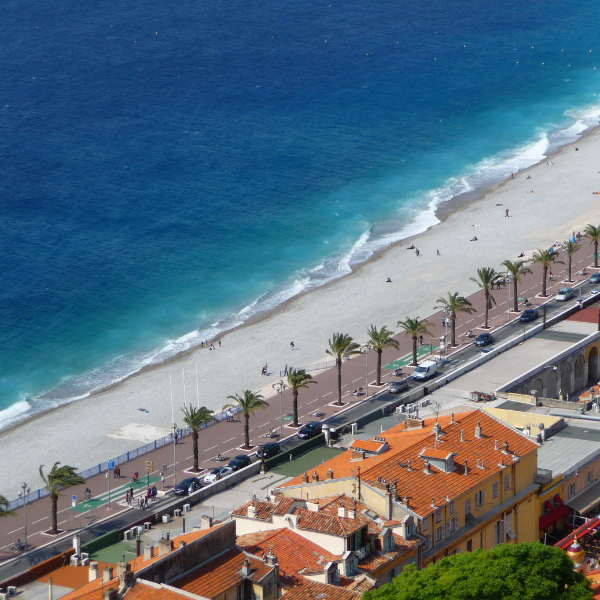
From Henri Matisse to Pablo Picasso, Marc Chagall and Raoul Dufy, the great masters of modern art were captivated by the light of the Mediterranean, the pastel facades of Nice, the coves of Antibes and the hills of Vence, the birthplace of Fauvism and Cubism.
Places to discover:
• In Nice, visit the Matisse Museum and the Chagall Museum, then stroll along the Promenade des Anglais, dear to Matisse. The Côte d'Azur painters' route continues in Antibes, where the Picasso Museum, housed in the Grimaldi Castle, overlooks the seascapes he painted. In Saint-Paul-de-Vence, the Maeght Foundation and the Route des Peintres à Vélo cycle route await you. Cagnes-sur-Mer is home to the Renoir Museum, and in Vence, don't miss the Chapelle du Rosaire, a masterpiece designed by Matisse.
• And also: in Le Cannet, near Cannes, visit the Pierre Bonnard Museum. In Saint-Tropez, the Musée de l'Annonciade pays tribute to Paul Signac. On the island of Porquerolles, the Villa Carmignac unveils contemporary works amid the vineyards. In Le Lavandou, a seaside resort at the foot of the Massif des Maures, follow in the footsteps of Neo-Impressionist painters such as Henri-Edmond Cross and Maximilien Luce to the Villa Théo, dedicated to the painter Van Rysselberghe.
Read: 10 artistic favourites on the French Riviera
The Barbizon painters' route, south of Paris
Barbizon, France
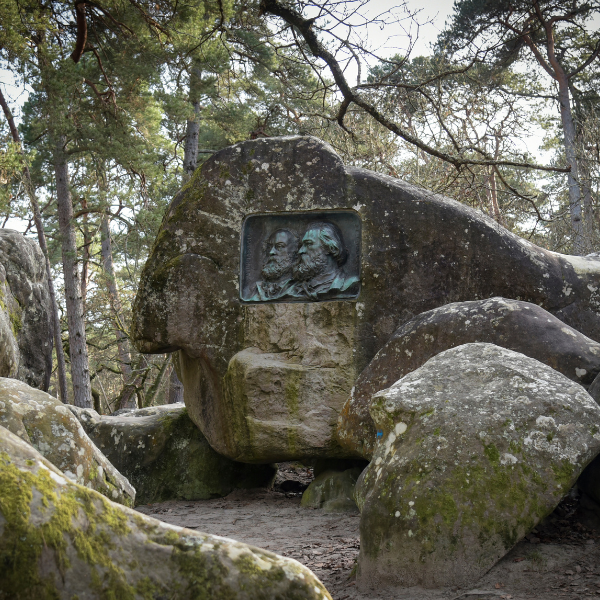
Before the Impressionists, the painters of the Barbizon School, represented by Théodore Rousseau, Jean-François Millet, Camille Corot and Charles-François Daubigny, found endless inspiration in the undergrowth of Fontainebleau, the clearings and the changing skies of the French Gâtinais region.
Places to discover:
In Barbizon, a charming village south of Paris, visit the Departmental Museum of Painters, housed in the Auberge Ganne, a former artists' haunt. The painters' trail then leads to the Forest of Fontainebleau, a labyrinth of rocks and hundred-year-old oak trees that has inspired so many masterpieces. Continue your discovery with a visit to the Château de Fontainebleau, another unmissable cultural stop just a few kilometres away.
Read: The guide to slow tourism spots in Paris and its surroundings with friends
The Pont-Aven painters' route in Brittany
Pont-Aven, France
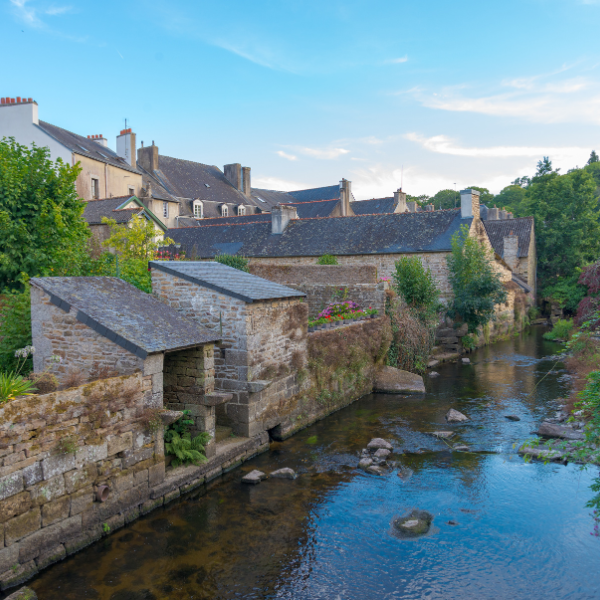
Steep cliffs, Breton chapels, mills, thatched cottages and reflections of light on the surface of rivers... These landscapes of Brittany inspired Paul Gauguin, Émile Bernard and the artists of the Pont-Aven School, pioneers of Synthetism at the end of the 19th century.
Places to discover:
In Pont-Aven, a small bucolic port in Finistère, visit the eponymous museum before strolling along the Aven, following in the footsteps of Gauguin and his famous work Vision after the Sermon. Walk along the marked trail of the Bois d'Amour with a stop at the Notre-Dame de Trémalo chapel to admire the painting Christ Jaune, stroll through the many art galleries before heading to Le Pouldu (in the commune of Clohars-Carnoët) and the Gauguin House Museum, a reconstruction of the boarding house where the artist lived.
In addition, the Chemin des peintres de la Côte d’Émeraude (Emerald Coast Painters' Trail) offers an immersion in other Breton landscapes around Dinard that have captivated artists.
From Saint-Rémy-de-Provence to Montagne Sainte-Victoire: the roads and paths of painters in Provence
Montagne Sainte-Victoire, Vauvenargues, France
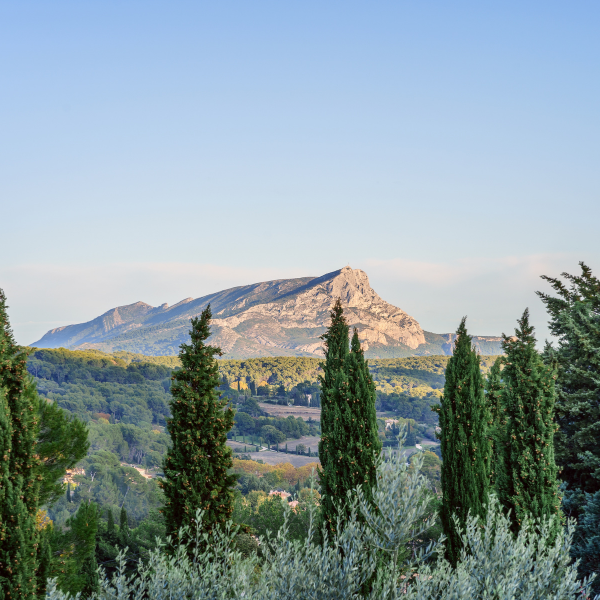
Montagne Sainte-Victoire, Calanques National Park, villages surrounded by hills... Provence charmed Paul Cézanne, Paul Signac and André Derain, who were fascinated by the clarity of its colours and the natural geometry of its landscapes, emblems of Post-Impressionism and Fauvism.
Places to discover:
In Aix-en-Provence, explore the collections of the Granet Museum in the city centre, then follow in the artist's footsteps by visiting Cézanne's studio (where you can see models of his final still lifes), the Belvédère du Terrain des Peintres viewpoint at the top of Lauves Hill, which is free to access, and the Jas de Bouffan country house. Then follow the Cézanne tourist route to Le Tholonet and the Bibémus quarries in the heart of the Sainte-Victoire Nature Reserve. There are numerous hiking trails to explore.
In Gardanne, a village located between Aix-en-Provence and Marseille, the narrow streets, the mine chimney and the Cativel hill inspired Cézanne's painting La Ville de Gardanne. A trail allows you to rediscover the viewpoints.
In L'Estaque, a district of Marseille, contemplate the bay that fascinated Cézanne and Braque and his holiday resort, near the church of Saint-Pierre.
Further north, in Saint-Rémy-de-Provence, follow the marked trail to reach the Saint-Paul-de-Mausole monastery, where Van Gogh created around a hundred paintings, including The Starry Night.
The painters' route in Provence
A stroll through Provence following the works of Cézanne
The Valley of Painters in Creuse, in central France
Crozant, France
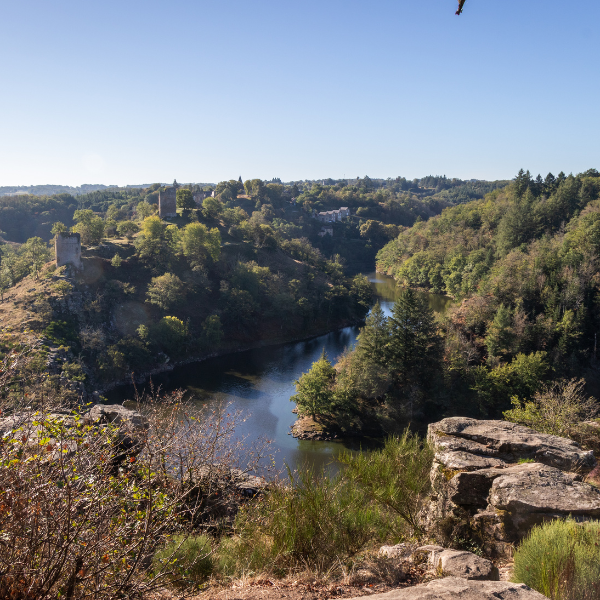
Picturesque gorges, medieval ruins, the meandering Creuse River... these bucolic landscapes in central France inspired Claude Monet, Armand Guillaumin, Francis Picabia and Léon Detroy, leading figures of Impressionism and Post-Impressionism.
Places to discover:
- In Crozant, in the valley of painters, explore the hilltop fortress and the Hôtel Lépinat museum, an inn once frequented by many artists that has become a centre for interpreting the painted landscape. Walk to the Moulin de la Folie, dear to Armand Guillaumin, or follow the 3 km painters' trail along the river to the Rocher de la Fileuse.
- In Fresselines, where Claude Monet stayed, the painters' trail leads to the confluence of the two Creuse rivers and Monet's rock.
- In Guéret, discover the art and archaeology museum dedicated to Guillaumin
- Make the most of your stay in the painters' valley to visit Gargilesse, listed as one of the most beautiful villages in France, where George Sand's house is located.
The painters' route in the Morvan Park, Burgundy
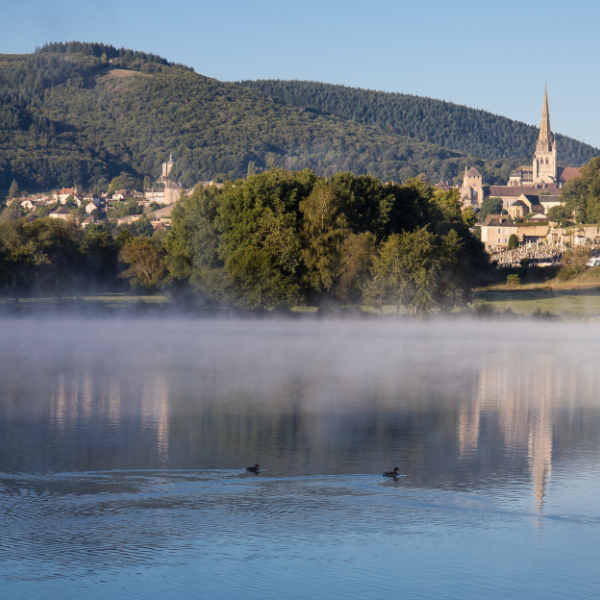
In the lush green landscapes of Morvan, in the heart of Burgundy, wooded valleys, peaceful lakes and ever-changing skies have inspired many artists, including Georges Rouault, Camille Pissarro and André Maire.
Places to discover:
In Vézelay, a spiritual and artistic mecca, golden light illuminates the stones of the Basilica of Saint Mary Magdalene and the ochre roofs of the village, magnified by Rouault. Several art galleries, such as the Saint-Pierre Gallery, offer exhibitions by contemporary artists in keeping with this tradition.
In Autun, where Pissarro painted the Gallo-Roman ramparts and panoramas from the upper quarter of the old town, visitors can explore the medieval streets before discovering several temporary exhibitions at the Rolin Museum (currently undergoing renovation).
Not far away, the Morvan Regional Natural Park, recognised as an International Dark Sky Reserve in 2025, stretches between rolling hills and deep forests, around the lakes of Settons and Saint-Agnan, sources of inspiration for André Maire.
Several villages, such as Arleuf and Glux-en-Glenne, also host exhibitions that can be discovered by following the ‘Tour du Morvan des Sommets’ itinerary, a 140 km route combining natural landscapes and artistic gems.
The Fauve painters' route in Collioure, on the Occitan coast
Collioure, France
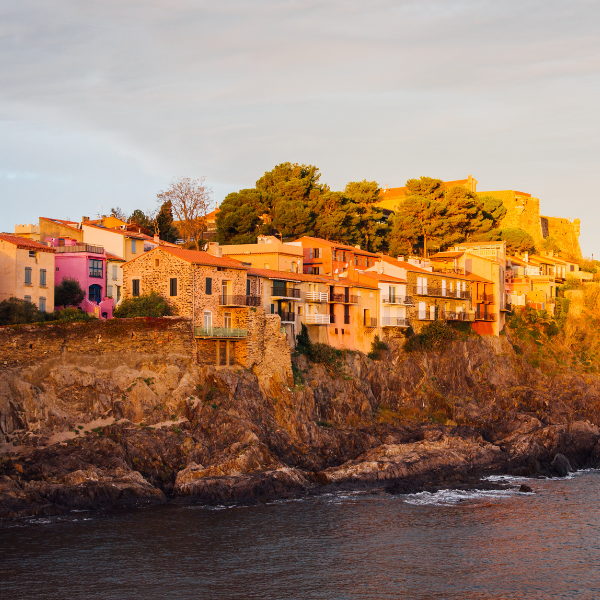
Colourful façades, Catalan boats and steep alleyways. In Collioure, on the Occitan coast, every corner captivated the brushes of Matisse, Derain and Braque, founding figures of Fauvism, an artistic movement in which colour became the main means of expression.
Places to discover:
The village offers an artistic trail, the Chemin du Fauvisme, dotted with reproductions of works installed in situ, allowing visitors to rediscover the viewpoints chosen by the Fauvist artists. The Collioure Museum of Modern Art traces the evolution of this 20th-century artistic movement through a rich collection. The tour continues along the seafront, between harsh light and ochre walls, to Fort Saint-Elme and the Mouré district, where many iconic paintings such as Matisse's La Jetée de Collioure were painted.
Read: The charm of the Occitan coastline by train from Montpellier to Perpignan
The Romantic Painters' Route in the Pyrenees
Cauterets, France
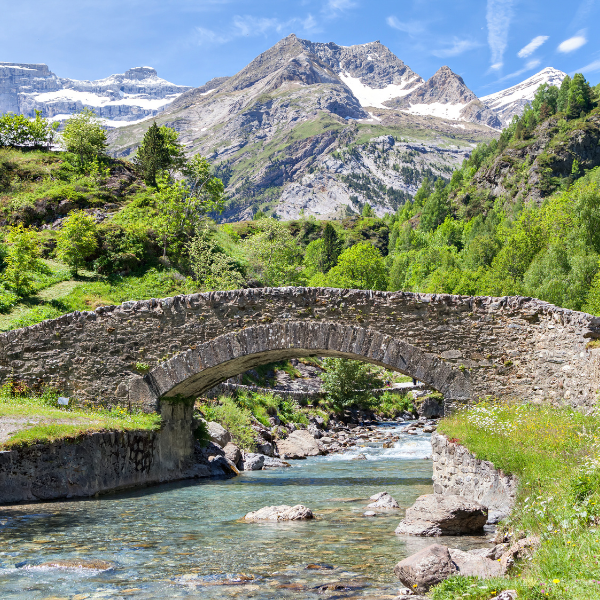
Jagged peaks, glacial cirques, dizzying waterfalls... The spectacular landscapes of the Pyrenees fuelled the imagination of 19th-century Romantic painters such as Gustave Doré, Joseph Latour and Eugène Viollet-le-Duc, who were fascinated by the power of the elements.
Places to discover:
The artistic journey begins in Luchon, the ‘Queen of the Pyrenees’, where the thermal baths and sumptuous panoramic views of the snow-capped peaks inspired these artists.
Continuing westwards, we reach Cauterets, a Belle Époque spa resort that has served as the backdrop for several paintings.
Further south, the Cirque de Gavarnie, a UNESCO World Heritage Site, was immortalised by Joseph Latour's pencil. If you are interested in this painter, you can plan a detour to the Tarn, where the Musée des Beaux-Arts in Gaillac houses dozens of his drawings.
Following the hiking trails of the Ossau Valley, you will find yourself facing the steep cliffs that captivated Gustave Doré's imagination, as evidenced by his engravings.
Finally, head east to the hilltop citadel of Villefranche-de-Conflent, dear to Eugène Viollet-le-Duc, who was passionate about medieval architecture.
To continue this artistic journey, head to the various exhibition spaces in mountain villages such as Arrens-Marsous and Lescun.
Read: Slow tourism: our top tips for unwinding in the Pyrenees
In the footsteps of Gauguin in Tahiti and the Marquesas Islands
Papeete, Polynésie française
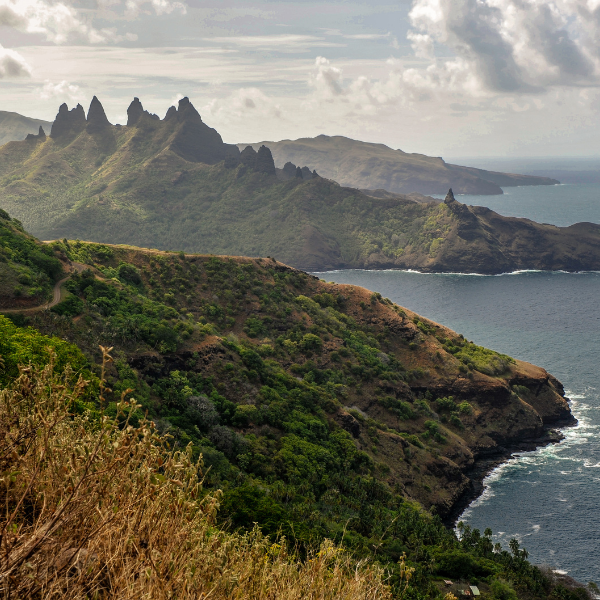
Turquoise lagoons, lush vegetation, remote villages... French Polynesia and its flamboyant scenery inspired Paul Gauguin to create a new art form characterised by vibrant colours and symbols.
Places to discover:
- Your itinerary in the footsteps of Paul Gauguin begins in Papeete, where the Museum of Tahiti and the Islands presents the landscapes, traditions and faces that influenced his work.
- Next, head to Papeari, on the west coast of Tahiti, to discover the Paul Gauguin Museum and the remains of his house, where he painted the picture Parau api (Women of Tahiti).
- The artistic journey ends in Hiva Oa, in the Marquesas Islands, in the village of Atuona. His Maison du Jouir has been reconstructed within a dedicated cultural centre, and his tomb overlooks the Pacific Ocean from a hilltop.
And also: contemporary art trails
In certain regions of France, art trails in the heart of nature showcase the works of contemporary painters:
In the heart of the Vercors Massif, gateway to the Alps, the Chemin d'Art (2.3 km) offers an open-air artistic stroll between the cliffs of Presles, the Bourne Gorges and the forests overlooking the Cirque de Choranche, where Thierry Chollat's raw sculptures (singular art) and Patricia Molins' poetic installations (land art) blend perfectly into the landscape.
In the Lot, the Sentier des Arts, a 1.6 km loop through the woods dotted with around sixty naive and spontaneous sculptures, takes visitors on a journey of discovery of local self-taught art. The trail is accessible on foot (or by mountain bike) and is located near Autoire and Loubressac, two gems of Occitanie listed among the Most Beautiful Villages of France.
A 100-km artistic itinerary located in the heart of the Monts d'Ardèche, south of Lyon, ‘Le Partage des Eaux’ is punctuated with contemporary works including Le Phare by Gilles Clément, a carved wooden belvedere symbolically marking the watershed between the Mediterranean Sea and the Atlantic Ocean. An immersive experience on foot, by bike or on horseback to discover the region's natural and cultural heritage, between Mont Gerbier-de-Jonc, the Chartreuse de Bonnefoy and the Abbaye de Mazan.

By The editor
The editorial staff of France.fr follows the trends and news of destinations to bring you stories from France that reveal its innovations and traditions that make you long to (re) discover its territories.