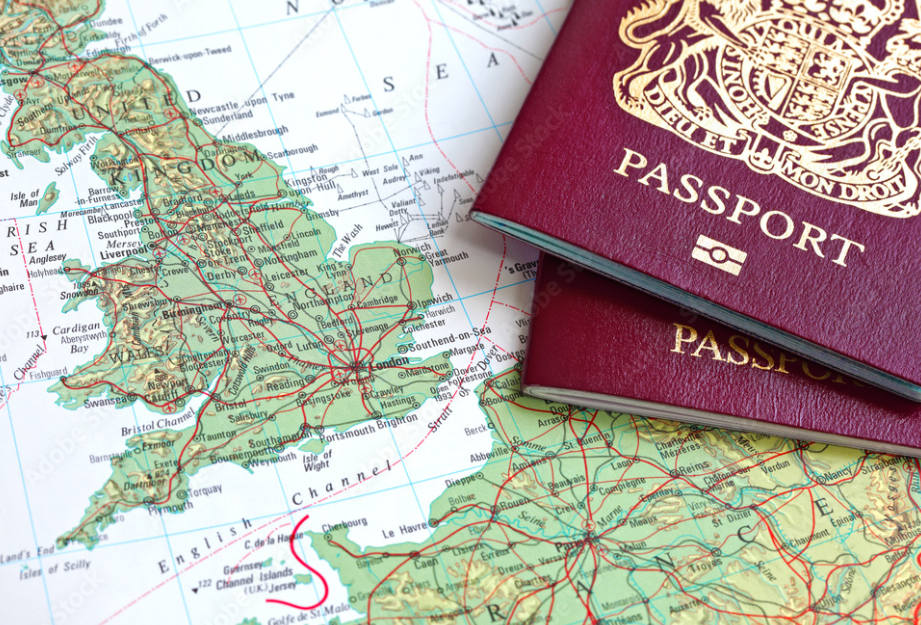
How do you obtain a VISA for a stay in France and what are the customs procedures?
VISA
Every foreign national wishing to come to France must be able to present documentary evidence regarding the purpose of theirstay, their financial means of support and conditions of accommodation to immigration upon arrival in the country.
Generally, unless exempted, a VISA is required. It must be acquired before departure for France at the relevant French embassy or consulate in the applicant’s country of residence. The type of VISA required to enter France depends on both the duration and reasons for the intended stay. Except in special cases:
- For stays of less than 90 days (3 months), the VISA to be requested is a short-stay VISA called "Schengen VISA". These VISAs can be issued for multiple entries. It is usually issued for tourist trips, business travel or family visits. It also allows the holder to come to France for short courses, internships, or gainful employment (artists on tour, athletes competing for a championship, an employee seconded to provide a service, etc.).
- Transit VISAs enable the holder to stay in the Schengen area for periods of less than or equal to 5 days.
- Foreigners in Transit through a French airport do not need VISAs as long as they do not leave the “international transit” area of the airport, as they'll not be entering French territory.
- For stays over 90 days (3 months), the VISA to be requested is a long-stay VISA, the length and type will depend on the duration and reasons of stay. This VISA requires registration, upon arrival in France, with the “French Office of Immigration and Integration” or, with the appropriate prefecture responsible for issuing a residence permit.
Once registered in France, the VISA holder cannot obtain a modification of his/her VISA or a change of status. Furthermore, the exercise of gainful employment is subject to specific procedures that require a work permit before obtaining a VISA.
Regarding the French overseas territories, the rules may differ from those applicable in the French metropolitan area. The applicant must precisely specify his/her purpose of travel to the overseas territories as well as his/her travel details.
VISA Exemptions
The EU Regulation 539/2001 removes the need for certain foreign nationals to obtain a short-stay VISA when entering the Schengen area.
Depending on your personal situation, specific measures of the law of the European Union are applied:
Nationals of EU Member States, the European Economic Area or Switzerland are not subject to entry visas and residence permits, regardless of length of stay.
Family members (partner, dependent children, dependent ascendants) of an EU Member State citizen, the EEA or Switzerland (who are not themselves citizens of an EU Member State, the EEA or Switzerland) are subject to the same visa and other permit rules as other foreigners of their nationality.
Customs
Upon arrival in France at a land border, railway station, port or airport, there are two separate passages through customs depending on the nature and the quantity of your goods: the "green" lane and the "red" lane.
In the first case, you have nothing to declare. In the second, according to one or several standards discussed below, you are under obligation to declare your goods.
Upon both arrival and departure from France, you must declare the money, titles and/or assets that you're carrying with you. This report is intended for the Customs Administration, which conducts inspections in a campaign against money laundering and drug trafficking.
Note: You may be checked throughout the national territory.
Source: Ministry of Foreign Affairs and the General Directorate of Customs and Excise.
Entry Exit System (EES)
Third-country nationals wishing to enter or leave France and the entire Schengen Area will be required to comply with the Entry Exit System (EES) as of 12 October 2025.
No more stamps on travellers' passports when entering and leaving French territory. A new system for recording entries and exits from the Schengen Area will be introduced for short stays (up to a maximum of 90 days).
This electronic system will be used to monitor entries, exits, refusals of entry and lengths of stay, to strengthen the fight against irregular immigration and to enhance internal security.
The personal data recorded will include:
The date and time of entry into and exit from the territory
The place of entry and exit
The national's surname(s) and first name(s)
The national's passport number
The national's photograph
The national's fingerprints
The potential decision to refuse entry for a short stay (less than 90 days)
NB: Registration takes place at the border crossing point upon arrival in the Schengen area. Refusal to provide the requested data will prevent passage across the border.
Find out more:
- EU website
- French Ministry of Foreign Affairs website
European Travel Information and Authorisation System (ETIAS)
From the last quarter of 2026, non-European nationals exempt from visa requirements will also be required to provide authorisation when entering and leaving France and all countries in the enlarged Schengen Area (30 countries).
Valid for 90 days and valid for 3 years, this ETIAS (European Travel Information and Authorisation System) travel authorisation will be issued within 96 hours of completing an online form. Travellers will be required to pay a fee of £20.
The ETIAS travel authorisation will not apply to visitors under the age of 18 or over the age of 70.
NB: if travellers have not created their ETIAS before departure, they will be stopped at the airport of departure and will not be allowed to board their flight.
The only website authorised to issue ETIAS is: https://travel-europe.europa.eu/etias
Find out more:
Information on visas and entry formalities for France
Information on French customs services
Information on the EES and ETIAS systems: French Ministry of Foreign Affairs website
Information on the EES and ETIAS systems: EU website for travellers

By Explore France
Le site France.fr vous parle d'une France inattendue qui revisite la tradition et cultive la créativité. Une France bien au-delà de ce que vous imaginez...