Just under two hours from Paris, Aube in Champagne reveals a quieter, more intimate side of the region, where medieval streets give way to vineyard-covered slopes, family-run cellars, forests and vast lakes.
Look up and you’re in the Middle Ages
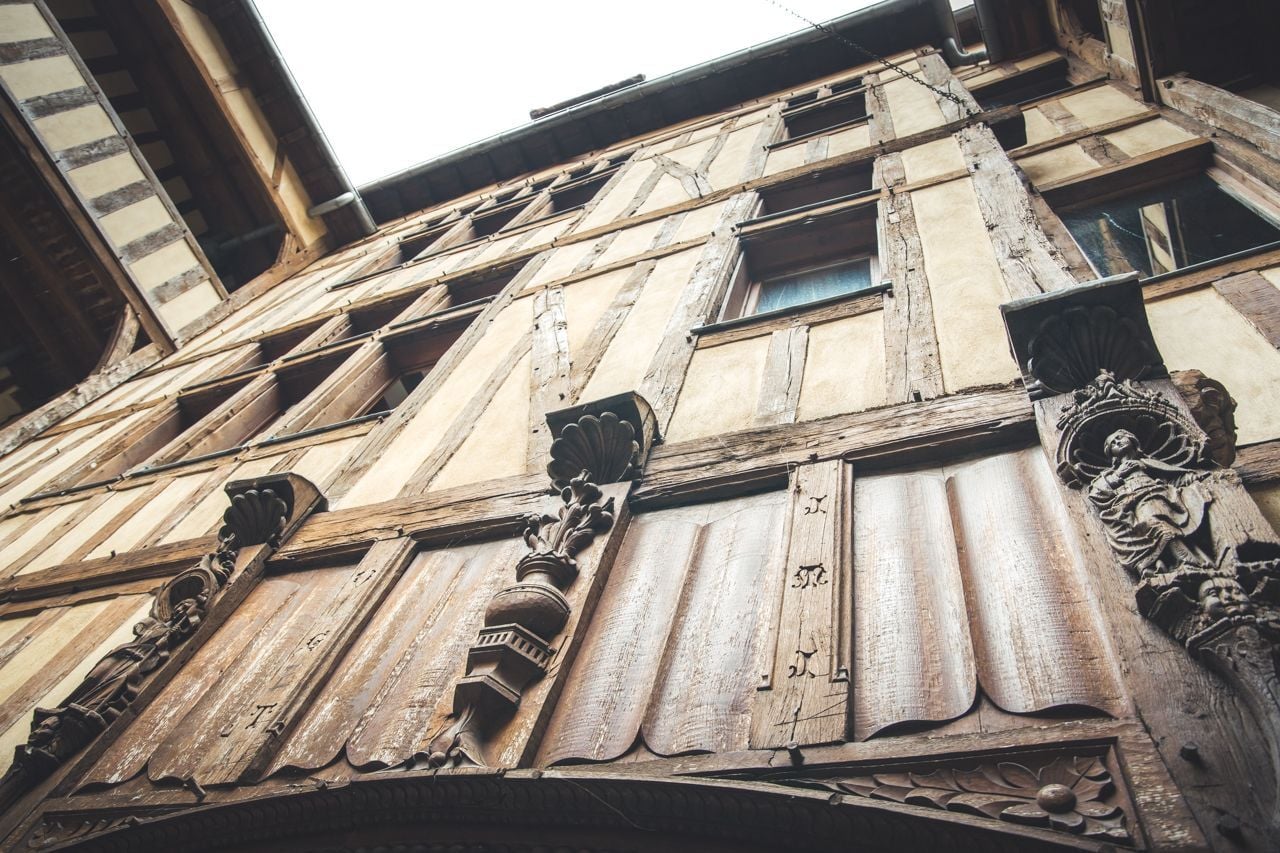
Start in Troyes, once the capital of the Counts of Champagne. It is one of the best-preserved medieval cities in France. After a devastating fire in 1524, the city was rebuilt in the 16th century in timber-framed style and remains a rare place where so many houses are still built of assembled timber. Nose up and you’ll find intricate details where artisans chiselled small figures, human faces, grotesques, mythical monsters and plant motifs directly onto the exposed ends of timber beams. These carvings were more than decorations, their figures and symbols once conveyed stories and messages to the people passing below. Today, spotting them among the timber facades adds another layer to exploring Troyes - particularly with children, who can look out for strange faces, creatures and mythical beasts along the way.
Wander the narrow lanes, including the Ruelle des Chats, where the overhanging upper storeys lean so close together that, as the tale goes, cats could leap across from one side to the other. As you squeeze through the dim, cobbled passage, look out for a cat’s head carved into one of the ancient beams!
Like its cats, Troyes knows exactly where to find the cream. Head under the Halles de Troyes, the market hall where decadence is piled high on every stall. Look out for:
- Chaource, a soft cheese with a protected AOC status, rich and creamy and utterly distinctive.
- Andouillette 5A,Troyes’ famously characterful pork sausage, traditionally prepared and seasoned by hand, with the prestigious 5A distinction reserved for outstanding examples of this local speciality .
- Prunelle de Troyes, a sloe liqueur whose recipe has been a closely guarded secret since 1940.
Meet the people behind the bubbles, a story of resilience
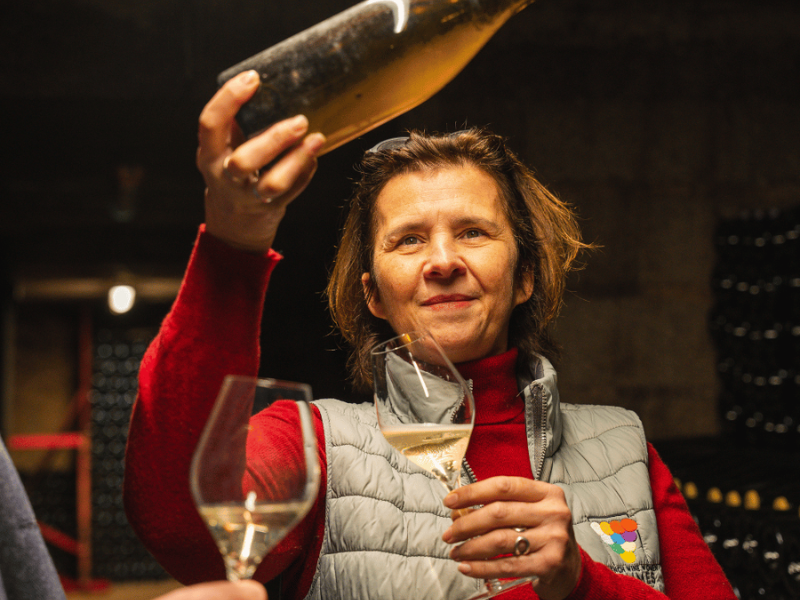
While Reims and Épernay may be Champagne’s most famous names, further south the Aube has forged an identity of its own. Its winegrowers worked hard for their place within the Champagne appellation, and that determination still runs through the Côte des Bar today. The focus is on the people who make it: family-run cellars, generations of knowledge and growers who remain closely connected to the land they cultivate.
That identity runs through the Côte des Bar, where Pinot Noir dominates the vineyards, accounting for 83% of vines. Thriving on the region’s clay-limestone soils, it gives the Champagnes of southern Champagne much of their distinctive character, bringing structure, depth and generous fruit.
Further south, in Les Riceys, Pinot Noir reveals another side of its personality. The village is the only one in Champagne to hold three wine appellations, including the rare Rosé des Riceys, a still rosé made from Pinot Noir and produced only in the best years. It’s well worth stopping at a cellar to discover one of Champagne’s best-kept secrets.
There are plenty of ways to get closer to the vineyards too. Sit down to a seasonal meal with a winegrower at Champagne Piollot, either in the kitchen, winery or among the vines; cycle through forests, rivers and vineyards with a member of the Richardot family before heading back to the cellar for a tasting; or pick up a gourmet picnic at Champagne Drappier, complete with local produce and a bottle of Champagne, and find a quiet patch of countryside to lay down your blanket.
These are just a few of the 10 secret Champagne experiences, with plenty more reasons to go beyond a traditional cellar visit.
Take the road less travelled
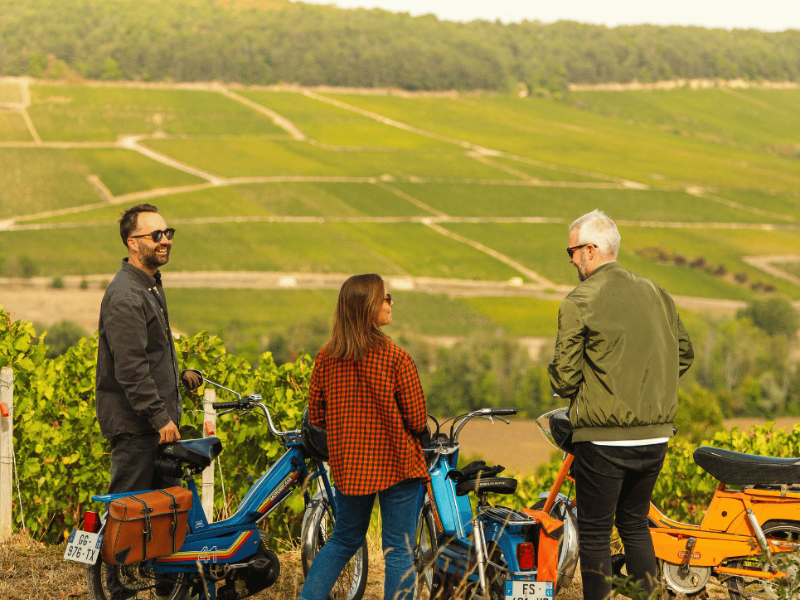
Widen the lens beyond the vineyards and take the region's country roads. Drive through its villages, wine covered slopes and forests under narrow countryside roads.
The tourist Route du Champagne of the Côte des Bar threads through rolling vineyards, wooded hills and small winegrowing villages, stopping at family-run cellars along the way. From the higher ground, vines ripple across the slopes, broken up by pockets of forest and fields of sunflowers.
Every summer, the Route du Champagne en Fête brings this route to life for one weekend, when winegrowers across a different village or area of the Côte des Bar open their cellars to visitors. Pick up a Champagne flute and Carnet de Route and make your way from one estate to the next, meeting the growers and tasting their Champagnes along the way.
Best explored at a slower pace, walking and cycling trails offer another way into the landscape, following quiet paths through forests, valleys and open countryside.
Near Bar-sur-Seine, in the village of Fouchères, the 18th-century Château de Vaux rises from this rural landscape, surrounded by woodland and open countryside. Designed by Germain Boffrand, one of the leading architects of his time, its grand classical façade and sweeping grounds feel almost unexpected in such a quiet setting. Inside, restored rooms, cellars and outbuildings offer a glimpse into the life of an aristocratic country estate in the decades before the French Revolution, while trails lead into the surrounding forest. Another reminder of how much heritage the Aube keeps quietly tucked away.
The Forêt d'Orient and its lakes
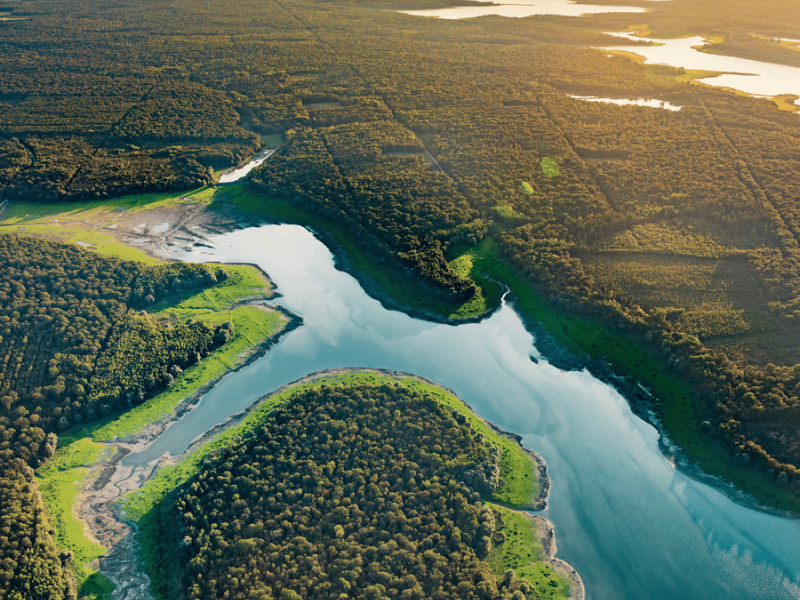
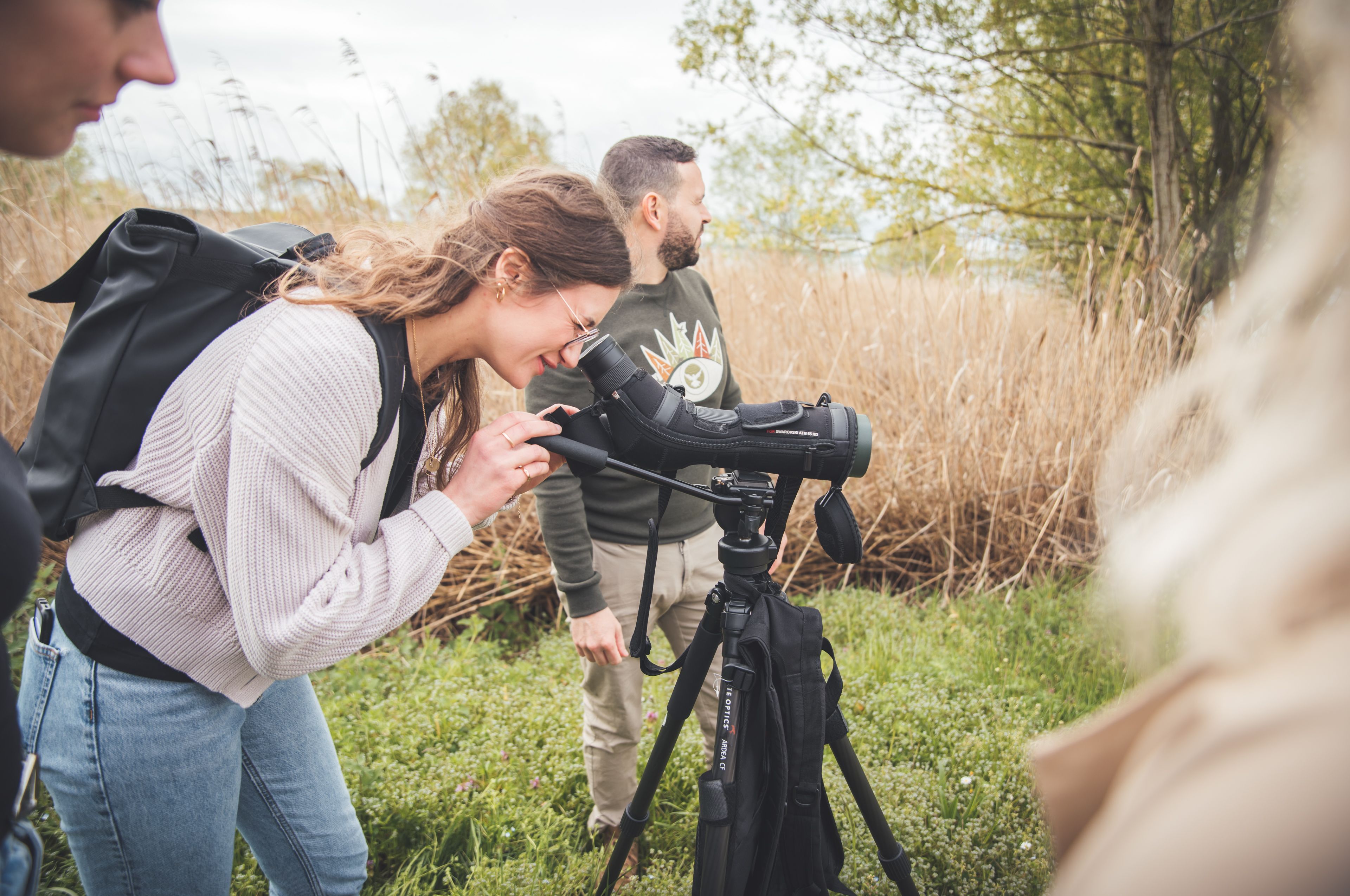
Less than 30 minutes from Troyes, and 1h20 from Reims, the Parc naturel régional de la Forêt d'Orient covers 82,000 hectares of lakes, forests and ever-changing scenery – a place to slow down, explore the region's wildlife and reconnect with nature. Birdwatching is a major draw, with between 250 and 300 species recorded across the park. Along the shores, children can follow animal tracks, spot signs of mammals and insects, and learn to recognise birdsong.
But birdwatching is only one way to experience the lakes. The Forêt d'Orient is a natural playground that changes with the seasons. Miles of cycle paths wind between lakes and forests, while four sandy beaches offer swimming and lazy days by the water in summer. Out on the lakes, sailing, paddleboarding and kayaking open up a completely different view of the landscape - including the unusual experience of paddling through a submerged forest when water levels allow.
Come autumn, the scenery takes one warmer tones.The roar of red deer carries through the rutting season, one of the area's most spectacular wildlife experiences. Whether you explore on two wheels, from the water or on foot, the lakes offer a wild escape just 30 minutes from the medieval streets of Troyes.
Discover all the ways to experience the Forêt d’Orient lakes here.
A cultural side to Aube
There is plenty to discover indoors too. Back in Troyes, the Cité du Vitrail is dedicated entirely to the art of stained glass, with pieces from different periods, styles and techniques displayed up close. Aube is known as the European capital of stained glass, and from here you can follow the Route du Vitrail across the department to see more of it in churches and historic buildings.
Troyes is also home to the Musée d’Art Moderne, with nearly 3,000 paintings, sculptures and drawings, while the historic apothecary at the Hôtel-Dieu-le-Comte has kept its collection of old painted wooden boxes and ceramic medicine jars.
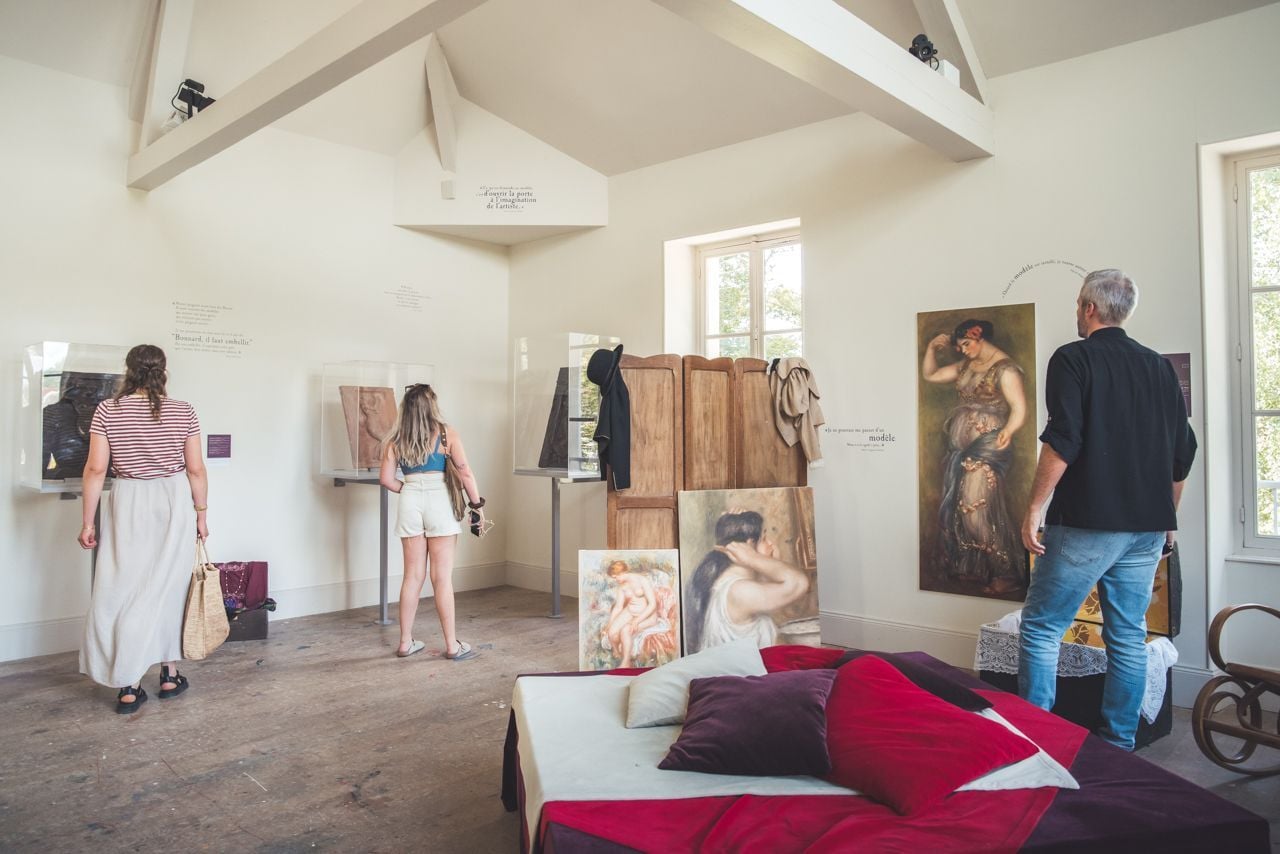
Further south, Essoyes was the home of Pierre-Auguste Renoir and his family. His wife Aline was born in the village, and Renoir returned here for close to thirty summers, finding inspiration in its landscapes and people. Visit the family home and his studio, still home to objects used by the painter, before walking through the village to the cemetery where Renoir, Aline and their three sons, Pierre, Jean and Claude, now rest.
Stay a little longer
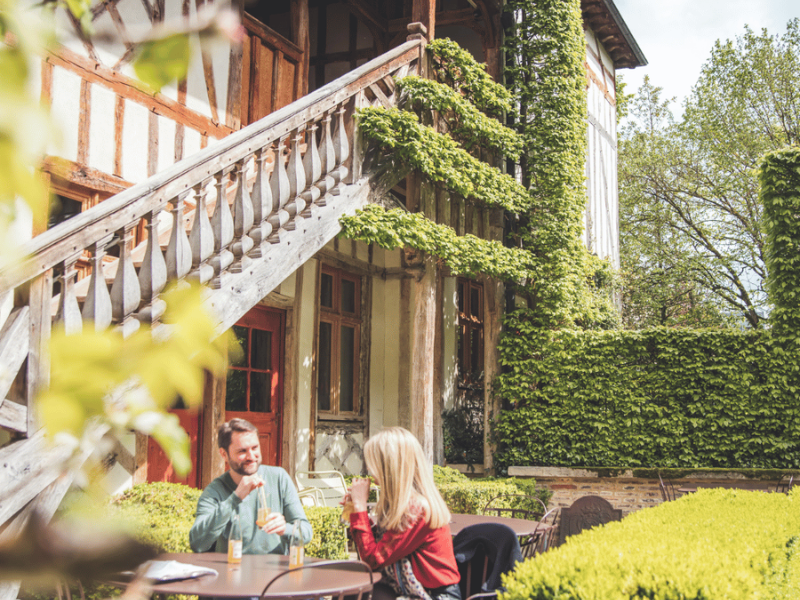
In the historic heart of Troyes, Le Champ des Oiseaux is set within a beautifully restored 15th-century timber-framed building, perfectly in keeping with the medieval character of the city around it. Behind its traditional façade, rooms blend period details with elegant, understated interiors, while a secluded courtyard garden offers a peaceful spot away from the cobbled streets. There’s also a spa and heated outdoor pool, making it an inviting base for slowing down after a day exploring Troyes.
Further south, among the vineyards of the Côte des Bar, Villa Eulalie offers a quieter, more intimate stay in the wine-growing village of Bligny. With just two individually decorated suites, the guest house has the feel of a private country home, complete with a leafy garden and terrace. Mornings begin with a homemade breakfast, before heading out to explore the surrounding vineyards, Champagne houses and villages that characterise this lesser-known corner of the region.
For a stay immersed in nature, Camping du Lac d’Orient lies just a short walk from the shores of Lac d’Orient, surrounded by the greenery of the Forêt d’Orient Regional Natural Park. Guests can settle into a mobile home, lodge or traditional camping pitch beneath the trees, with the lake close by for swimming, watersports and long walks along the water.
A trip to remember
From medieval streets and stained-glass treasures to vineyard lunches and lakeside adventures, this corner of the Champagne region packs a remarkable variety into a small area. A morning among Troyes’ timber-framed houses can lead to an afternoon cycling between the vines, meeting local growers or picnicking with a bottle of Champagne, before a paddle or swim in the lakes of the Forêt d’Orient. It’s a place shaped as much by its landscapes, people and stories as by the wine that made it famous. Travel south, and Champagne opens the door to a side of the region few have yet to discover.

By Kimberley Rino Lightfoot
Content Coordinator at Atout France and Travel Writer.


